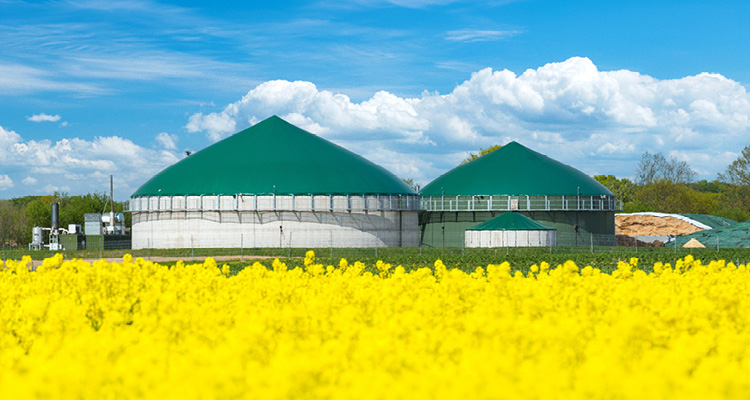
Wolfgang Bongartz’s advice on optimizing biogas plant operations in an era of increasing demand
The biomass and biogas sector is transitioning towards becoming a key part of the global energy transition, with the conversation shifting from potential to operational optimization. While the clean energy sector develops strategies to cope with solar and wind storage bottlenecks, biomass is increasingly being reviewed as a valuable option to stabilize ageing grids.

Key trends include a significant push to upgrade raw biogas into biomethane (RNG) and use existing gas infrastructure, bypassing the high capital costs of total electrification. Alongside the growth of the green hydrogen economy, biogas offers a mature, cost-effective pathway to generate syngas through advanced bi-reforming. Integrating biogas into the energy mix provides the industrial and transport sectors with immediate flexibility. Likewise, while managing organic waste, such as landfill, agricultural waste and slurry, was previously viewed as a cost center, biogas offers the opportunity to create high-value outputs like sustainable aviation fuels (SAF) and green chemicals.
Not only can biogas be a productive and lucrative process for many plant owners, through sale back into the gas network, it also offers opportunities to separate other useful components, such as in-demand carbon dioxide or biochar carbon-rich material which can be used as a fertilizer.
As businesses become increasingly focused on reducing their environmental burden and becoming more efficient and carbon-neutral, biogas production will continue to grow. There are five key areas where plant owners can focus their attention on getting optimal efficiency from operations – flexibility, sizing, quality, standards, and performance optimization.
Flexibility
The biogas each facility produces is unique, as it varies depending on the type of waste being processed. Although the majority of biogas is made up of CO₂ and biomethane, traces of nitrogen, oxygen, or hydrogen sulfide can also be present. This will give plants that can effectively process such fluctuating inputs, and that offer flexible production or capture capabilities, a distinct advantage, while keeping waste to an absolute minimum.
Right sizing
According to ResearchAndMarkets, the global biogas market is forecasted to grow by USD 21.07 billion during 2025-2030, accelerating at a CAGR of 5.9 percent during the forecast period. So, in addition to greater flexibility, biogas plants must get their sizing right to cope with both current and future capacity requirements. If production level growth is not adequately forecast, a production plant has the potential to quickly outgrow its equipment, necessitating investment in a new filtration system.
Quality considerations
Plant owners must increasingly prioritize capital equipment investments that meet multiple criteria. Industrial filtration supports biogas plants by helping remove contaminants like moisture, oil and particulates. Such systems can support equipment integrity to help maintain the high gas purity required for efficient biomethane upgrading.
Filters should therefore be designed to endure challenging production environments, resist corrosive gases and allow for easy replacement of elements, while removing impurities. Dryers must also be energy-efficient and accommodate variations in air flow, while reducing humidity and moisture to ensure high-quality production. All of this must fit inside an optimized set-up focused on profitability with minimal cleaning and downtime risks. Ultimately, an industrial filtration system should enhance biogas delivery.

Design to standards
While policies and regulations vary from country to country, all are centered around a common framework defining quality standards, procedures, traceability and compliance. In an evolving regulatory landscape, biogas production quality standards are anticipated to become increasingly stringent, which necessitates future strategies that support asset resilience. Companies should pay particular attention to the EU’s ATEX directives which harmonize safety rules for equipment in potentially explosive atmospheres. We are seeing more customers specifying ATEX standards not only for compliance but to ensure the highest levels of quality and to help future-proof their facilities.
Maximizing performance
Regular maintenance is the cornerstone of ensuring optimal performance and longevity for biogas production facilities. By adopting a proactive approach to maintenance, plant operators can minimize downtime, enhance productivity and maintain the highest quality standards. A well-maintained facility not only secures operational efficiency, it also supports long-term profitability, making maintenance a sound investment in the long-term sustainability of biogas operations.
Biogas production is currently a compelling example of a circular business model, as the energy sector faces mounting pressure to increase output and maximize operational efficiency. Advanced filtration and drying technologies support this evolution through equipment protection that helps to extend asset life cycles. Through contaminant and moisture removal, such systems help to maintain the gas purity standards required for biomethane upgrading and grid injection, while minimizing downtime. As the commercial and regulatory landscape matures, operators that invest in high-performance filtration infrastructures, and adopt a strategic approach to operational efficiency will be best positioned to capitalize on the considerable growth opportunities presented by the biogas market of the future.
For a list of source used in this article, please contact the editor. This information is provided for general guidance only and should not be considered legal, regulatory, or technical advice.
Wolfgang Bongartz
Wolfgang Bongartz is a Global Product Manager Industrial Gases at Donaldson, a global leader in technology-led filtration products and solutions. Wolfgang is responsible for compressed air and industrial gas treatment products. With more than 30 years of experience in gas filtration, drying and purification, he works closely with global sales and engineering teams to develop application-focused solutions that support the global energy transition.