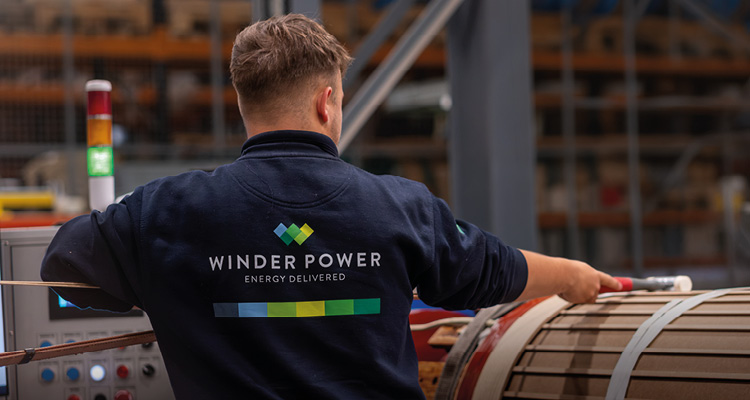
Winder Power scales transformer production, workforce, and services to meet energy system demand growth
Demand for grid infrastructure keeps outpacing supply, putting pressure on manufacturers to deliver capacity at a pace utilities and developers can trust. Across the UK, network upgrades, renewable connections and data center growth are driving orders for larger transformers. With volatile global supply chains increasingly threatening infrastructure timelines, Winder Power’s domestic manufacturing capability is turning industry-standard lead times into a distinct competitive advantage.
At its Leeds site, Winder Power has entered a new chapter fueled by steady investment and significant operational changes. Josh Doust, Group Sales & Marketing Director, is right at the heart of that transition – shaping how the business communicates its capabilities to utilities, renewable energy companies, and industry partners. When it came to defining the next phase of growth, Josh’s answer was straightforward. “We asked ourselves, ‘What is next for our business’s evolution?’ That pointed us directly toward higher-voltage transformer manufacturing.”
Factory transition
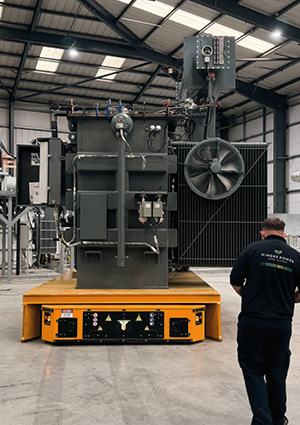
The move to 132 kV has not been a single upgrade; it has touched nearly every corner of Winder Power’s manufacturing site and has not been without challenges that, as a business, it has overcome. “The new 132 kV line is now fully operational,” Josh explains, highlighting that the collaboration across the business to get this major milestone complete has been fantastic. Production has already begun, with the first unit moving along the line. “This is the first 132 kV transformer we’ve designed and manufactured ourselves and it is not a small one either, rated at 45/60MVA,” he notes, referring to a unit now nearing testing. For Josh and the wider business, this marks a genuine shift in capability, connecting design ownership with manufacturing delivery.
A wider upgrade supports that move. New cranes and handling systems have been installed alongside new vacuum ovens and a giant new tanking pit. Josh describes the scale of the excavation work on the pit plainly, comparing it to a deep diving swimming pool.
Testing capacity has expanded alongside production. “We are now going to be operating two test labs within our factory,” Josh shares. The new high-voltage facility works beside the existing power lab. It is a practical move to keep throughput steady while handling larger units, so different product ranges can move through testing without delay.
“The opportunity was there for a UK manufacturer of these larger transformers. Demand is outstripping the supply chain,” Josh explains. That demand is translating into firm orders, with more than 20 units already confirmed at 132kV level. The order book is shaping how production scales, starting with one unit per month, then ramping up to two. At the same time, the company is pushing to increase output across its existing power transformer production line, from 11 kV to 66 kV, where demand is also up.
Josh is candid about where the pressure points remain. “There are still challenges with ramping up,” he admits. The aim is to double the existing output from the Power transformer line. To help make that happen, Winder Power is setting up manufacturing cells and assigning teams to clear stages of the process.
Winder Power’s massive workforce expansion mirrors its production trajectory. “In 2023, we had around 80 employees overall. We now have over 180 employees,” Josh highlights. Recruitment has targeted both production roles and specialist engineering, especially in higher-voltage design. That scale of hiring changes how every team operates. “We have got to make sure we are delivering products right the first time and on time,” he adds. For him, consistency matters more than ever as output grows.
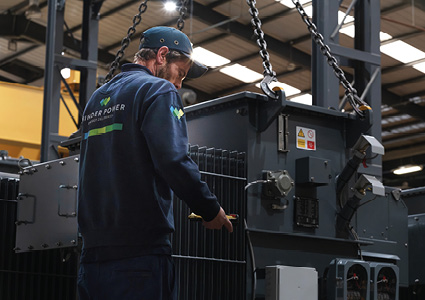
Beyond manufacturing, Winder Power has grown its services division. “We have almost doubled the size of the transformer service team,” Josh reports. The company invested in a separate facility in Rothwell to support installation, larger in-house transformer refurbishment, and substation work. He sees this as a natural extension of what Winder Power already delivers. The services team manages projects from the factory to installation and handover, connecting production with on-site delivery. The new site also provides space for refurbishment and other activities tied to transformer lifecycle support.
Culture and teams
As the business evolves, so does its approach to staffing its facilities. “We are undergoing a deliberate cultural evolution to support our rapid scaling,” Josh observes. He ties this managed transformation to the fast pace of hiring and the need for different teams to work in sync as production expands. Retention and training now sit at the top of the agenda. “What we do not want is for people to come in, not be looked after, and then leave,” Josh stresses. He highlights ongoing apprenticeship and graduate programs as key to building a pathway for future engineers. That investment extends beyond the factory floor. “We are investing heavily in people, looking to recruit across all functions of the business, ensuring we are maintaining the right levels of customer service.”
Moving forward
The next stage is all about execution, with the first 132 kV unit almost ready for testing. “All eyes will be on making sure we get through that first test,” Josh remarks. “Early builds will shape how the new line runs, how teams adapt and how processes settle into place. With the order pipeline giving the team a solid foundation, we’ve pretty much got the orders there for the next 12 months.” What comes next is a learning phase, grounded in the factory floor and measured in delivering right first time and on time.