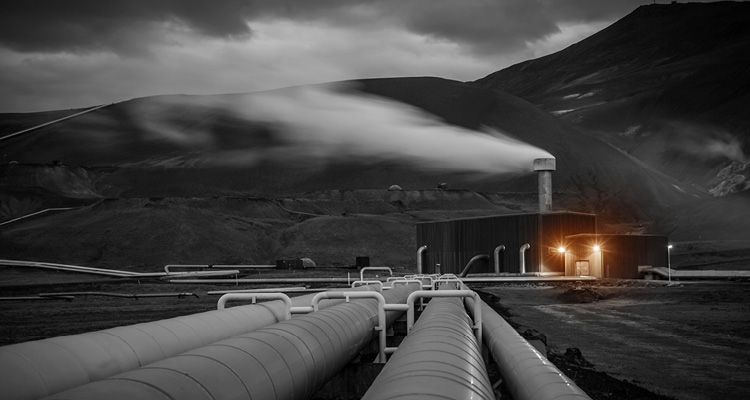
Will Butler on why geothermal still awaits major investment despite proven technology and resource availability
Will Butler’s career has been shaped by what lies underground. After pivoting his undergraduate studies from geology to engineering and starting his career in field operations in the oil and gas industry, Will moved into regulatory roles in Canada, collaborating with organizations including the Alberta Energy Regulator and BC Energy Regulator before founding his own consulting firm. Will subsequently pursued a Masters in Renewable Energy Engineering, deepening his technical foundation ahead of joining Arup in 2022. Today, Will is a Senior Consultant in Arup’s Business and Investor Advisory team, specifically within the renewable energy and utilities division, providing technical due diligence, project development, and transaction support across renewable energies, low-carbon, and energy transition infrastructure. His expertise spans geothermal, carbon capture, utilization and storage (CCUS), hydrogen, battery energy storage, and the broader renewables portfolio.
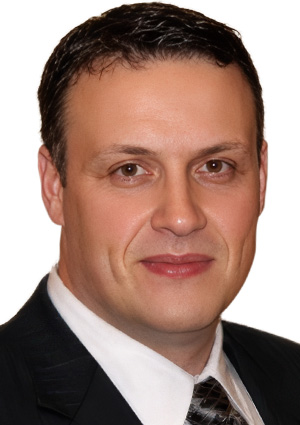
“I started my career working in high-pressure, high-temperature, sour gas environments where decisions are made in real time,” Will opens. “In Canada, I supported well remediation and decommissioning frameworks, as well as collaborated on early geothermal legislation, which was my first exposure to how subsurface systems can support the energy transition. Today, I focus on advising across geothermal, CCUS, and asset repurposing, translating technical risk into commercial and investment decisions for our clients. Working with investors, developers, and lenders, Arup bridges the gap between subsurface complexity and what’s required to make projects financeable and scalable.”
It wasn’t a single defining moment that led Will to oil and gas and then the shift to renewables, but rather a collection of interests and passions. “I was always interested in how the subsurface works, and I was drawn to applied science and engineering,” he shares. “Early exposure to risk assessment and decision making in the oil and gas industry shaped my career path going forward, and I’ve carried experience from this role into others, especially in terms of drilling operations, well integrity, and repurposing infrastructure. From the moment I started working on geothermal projects, I knew it was a technically interesting and challenging area that hadn’t been seriously explored beyond the oil and gas sector. Over my career, I’ve seen projects move from improving technologies to scaling them, and now the challenge is finding ways to deliver projects in a repeatable, financeable, and investable way.”
Arup
Operating across 140 countries, Arup is a global sustainable development consultancy offering a multidisciplinary approach to investment decisions, combining technical, commercial, and environmental due diligence, as well as project development. “I work across a range of technologies, from battery and solar to geothermal and hydrogen, and although the technologies are different, the underlying questions are often the same: where are the risks? How do the risks impact delivery and performance? And are the risks structured in a way that investors can understand and accept?” Will says.
“Technologies like wind and solar are now well understood, with good project repeatability and strong financing structures. In my view, geothermal is still one of the most underappreciated technologies in the energy transition. It offers something distinct: it’s a constant, weather-independent source of low-carbon energy, primarily for heat, which is one of the more difficult parts of the system to decarbonize. Geothermal behaves more like traditional infrastructure, with a long asset life, stable output, and minimal exposure to weather variability.”
Geothermal functions as a baseload rather than intermittent generation, meaning it complements technologies like wind and solar rather than competing with them. Unlike most other renewables, the risks associated with geothermal sit below the surface, invisible to those outside the subsurface world. “It’s not something you can readily see and interact with,” Will says. “The risk is not intuitive and that’s a big part of why it’s so underappreciated. However, as energy systems become more exposed to climate-related stress and conversations about energy security continue, the reliability and predictability of geothermal becomes much more valuable.”
In the UK, momentum and recognition for geothermal are slowly building at a policy level, with proposals in Cornwall, growing district heating network proposals, and increasing uptake of ground source heat pumps. However, Will clearly highlights that resources are not necessarily the constraint. “A big part of the problem is the early-stage risk, particularly around drilling and subsurface uncertainty, along with a fragmented regulatory landscape. Historically, there hasn’t been a coordinated national strategy in the UK to support development, and that adds time and complexity. Arup is working with industry bodies to close the gap, pushing for a more coordinated regulatory framework that could unlock consistent investment. We know the technology works, and we know how to deliver projects, but we need the delivery and investment framework to align.”
This is where Will’s due diligence work becomes central to the conversation. “The process is less about cataloging risks in isolation and more about understanding how those risks interact across a project’s lifecycle and how that interaction impacts investment,” he elaborates. “For established technologies like wind and solar, due diligence is largely a benchmarking exercise, as performance data is well documented, financing structures are understood, and the variables are generally known. For less mature first-of-a-find technologies, such as enhanced geothermal systems, that reference point often doesn’t exist.
“In geothermal, it starts with the subsurface: temperature, flow rates, reservoir sustainability. Those uncertainties quickly extend into the financial model, contracting strategy, and regulatory pathway. Risks don’t sit in isolation. Uncertainty in well performance can translate into revenue uncertainty, for instance, which impacts financing, or permitting delays can cascade into cost and program risk. Deals rarely fail because of a single issue, but rather because of how uncertainties interact across subsurface, commercial, and regulatory layers. This creates a gap between technical uncertainty and what investors expect, and if that gap isn’t managed through staged investment or risk-sharing schemes, for example, that’s typically when projects stall. Our challenge is to turn uncertainty into something structured and transparent from an investment perspective.”
Regulation also has a very strong influence on where capital flows. “In practice, investors tend to prioritize markets where there’s stable policy, clear permitting processes, and ideally a track record of delivery,” Will explains. “In countries like Turkey, the Netherlands, and Germany, geothermal heat networks have made meaningful progress, and in the US, companies like Fervo Energy have made advances in geothermal systems, reducing drilling costs and moving closer to the repeatable, predictable delivery investors need.”
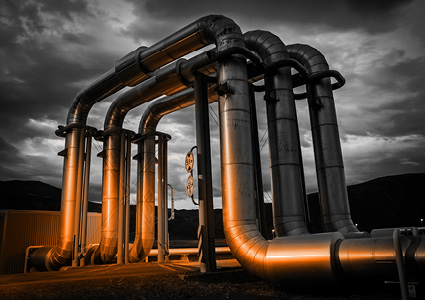
The possibility of repurposing existing oil and gas infrastructure generates considerable commentary across the energy industry, but Will explains why it should be approached with caution. “There’s a lot of narrative around repurposing infrastructure, and although it presents a meaningful opportunity with clear advantages, it’s not always correct,” he says. “There can be constraints around the integrity of the assets, such as wells, pipes, surface facilities, location, and resource temperature. Not all wells are suitable, and projects should be assessed on a case-by-case basis. Where it does work, it can reduce both cost and uncertainty by enabling access to legacy subsurface data, which reduces the risk and cost of exploration, which can make it a more attractive investment opportunity. Aside from infrastructure, there’s also huge potential for transferring skills from the oil and gas industry, as there are several overlapping aspects like drilling, well design, geology, and reservoir engineering.”
Across Will’s portfolio, he reports that the energy transition is moving fastest in markets where there’s alignment between policy, regulation, and capital. “There needs to be clear long-term direction, streamlined permitting processes, and mechanisms to support investors,” Will states. “We’re currently seeing a trend toward hybridization and integrated systems rather than isolated technologies, and I think the whole system approach is here to stay.
“The problem isn’t resource availability, but the confidence and ability to repeatedly and predictably deliver projects. We must align investor expectations with the reality of how projects develop. The technical risks are often understood, but the problem is restructuring them in a way that fits into an investment framework. Some solutions include phased investment structures where capital is deployed progressively as uncertainty reduces, portfolio approaches that spread risk across multiple assets, and public-private models that absorb the early risk.”
For Will, who began his career in the oil field and now advocates for the technology he believes the energy transition most underestimates, the alignment of conditions feels long overdue. As our conversation ends, Will shares his thoughts on how he expects his portfolio to evolve. He anticipates the integration trend to deepen, alongside stronger attention to climate resilience, and suggests that geothermal, as a stable, base load, locally sourced, weather independent source, is prepared to meet these demands.
“We’re going to see more integration across technologies, with previously isolated renewables working together as a system,” he confirms. Geothermal will play an increasingly important role, particularly when deployed with heat networks and other renewable systems. There will also be a stronger focus on energy security and climate resilience to ensure infrastructure is designed to perform under future conditions as well as current ones.
“Geothermal has been talked about for a long time, and it’s nice to see those conversations becoming louder and stronger in the UK and around the globe as conditions start to align,” Will concludes. “The challenge now is turning that momentum into consistently investable projects, and that’s where the industry needs to focus throughout the coming years.”