Why battery storage is moving from a renewable niche to a national priority

Subscribe to our free newsletter today to keep up to date with the latest renewable energy news.
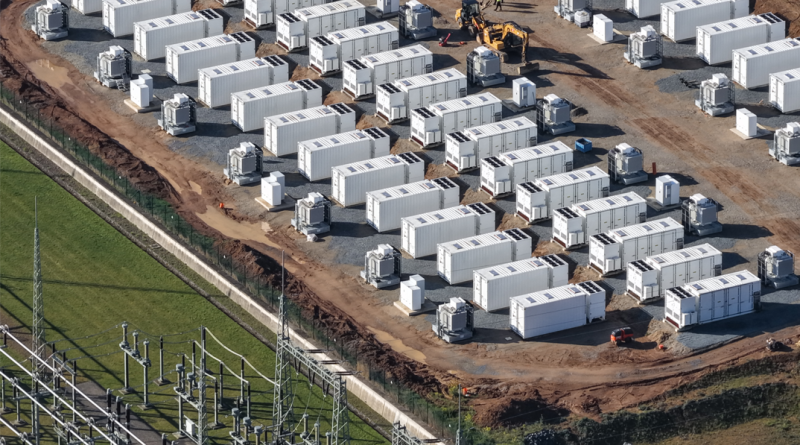
The US energy storage market is entering a new phase of industrial relevance as utilities, technology companies and manufacturers prepare for a sharp increase in electricity demand. What was once viewed primarily as a renewable energy support technology is now increasingly treated as critical infrastructure tied to economic growth, grid stability and the expansion of artificial intelligence.
Battery storage installations across the US continue rising rapidly as utilities confront mounting pressure from AI data centers, manufacturing reshoring and broader electrification trends. Recent industry data showed the US added nearly 10 gigawatt-hours of energy storage capacity during the first quarter of 2026, pushing total installed capacity close to 175 gigawatt-hours nationwide.
The pace reflects a structural shift underway across the energy sector. For years, storage projects were largely attached to solar or wind developments to manage intermittent generation. Utilities now increasingly view standalone storage systems as operational necessities capable of balancing electricity markets, reducing price volatility and protecting grids during periods of extreme demand.
The timing is significant. Electricity consumption forecasts across the US have been revised upward repeatedly during the past two years as AI infrastructure development accelerates faster than many grid operators expected.
AI and industrial electrification are accelerating pressure on the US power grid
The rapid expansion of AI data centers is becoming one of the largest drivers of electricity demand growth in decades. Analysts expect US data center power consumption to nearly triple by 2030 as companies invest heavily in generative AI infrastructure, cloud computing and advanced semiconductor manufacturing.
That surge arrives alongside a broader wave of industrial electrification. New semiconductor facilities, battery factories and advanced manufacturing plants are placing additional pressure on grids already navigating aging infrastructure and increasingly volatile weather patterns.
Utilities face a difficult balancing act. Traditional transmission and generation projects often require years of regulatory review, permitting and construction before becoming operational. Battery storage offers a faster deployment pathway capable of stabilizing supply during peak demand periods.
Texas has emerged as one of the clearest examples of this transition. The state’s ERCOT grid continues adding record volumes of battery storage as operators attempt to manage rapid population growth, rising industrial activity and renewable energy expansion. California remains another major storage market, where batteries are increasingly used to offset evening demand spikes after solar generation declines.
The economics are also shifting quickly. Falling battery costs and improved project financing models have made utility-scale storage more commercially attractive than many utilities anticipated even a few years ago.
Renewable generation continues expanding across the US electricity mix. Solar and wind represented roughly 18% of total US electricity generation in 2025 and are expected to rise further during the next several years. That trend increases the need for flexible storage systems capable of balancing intermittent generation throughout the day.
Battery storage is becoming a financial and operational tool for utilities
The energy storage market’s growth is no longer driven exclusively by climate targets or renewable integration mandates. Utilities increasingly view storage as a financial tool that can reduce exposure to peak electricity pricing and improve operational efficiency across volatile energy markets.
Battery systems allow grid operators to store electricity during lower-demand periods and discharge power when prices rise or demand surges. The strategy helps utilities avoid purchasing expensive electricity during peak periods while improving reliability during extreme weather events.
That operational flexibility is becoming more valuable as weather volatility increases. Heat waves across the Southwest and winter storms in parts of the Midwest and Northeast have exposed weaknesses in regional grid infrastructure during recent years. Storage systems can provide rapid-response backup power when traditional generation assets fail or transmission networks become constrained.
Institutional investors are also paying closer attention to the sector. Infrastructure funds and private equity firms increasingly view energy storage assets as long-term investment opportunities tied to durable demand growth. Analysts project the US energy storage market could exceed hundreds of billions of dollars in value during the next decade as deployment scales accelerate.
The sector’s expansion is also creating downstream effects across manufacturing and supply chains. Domestic battery production capacity is increasing as companies attempt to localize supply chains and reduce dependence on overseas battery manufacturing. Federal incentives tied to clean energy and industrial policy continue supporting those investments.
Challenges remain. Supply chain bottlenecks, permitting delays and concerns around lithium sourcing continue shaping project timelines and economics. Long-duration storage technology also remains an active area of development, particularly as utilities seek systems capable of supporting grids for extended periods during prolonged disruptions.
Regional competition is reshaping the US energy storage economy
A growing divide is emerging between states aggressively investing in storage infrastructure and those moving more cautiously. Texas and California remain dominant markets because of their scale, renewable generation growth and policy support, though several Southern states are beginning to attract larger investment volumes tied to manufacturing expansion and data center development.
Arizona, Nevada and Georgia are also becoming increasingly important storage markets as utilities prepare for continued population growth and industrial demand increases. Data center operators frequently prioritize regions capable of guaranteeing long-term electricity reliability, creating additional incentives for states to modernize grid infrastructure.
The competition increasingly resembles a broader economic development race. Regions with stronger grid flexibility and greater storage capacity may become more attractive destinations for AI infrastructure, semiconductor production and advanced manufacturing investment during the next decade.
Federal policy continues playing a major role in accelerating deployment. Tax credits and manufacturing incentives introduced through recent energy legislation have improved project economics and encouraged domestic investment across battery manufacturing and grid infrastructure.
Industry forecasts suggest total US storage capacity could exceed 600 gigawatt-hours by 2030, transforming storage from a supplemental technology into a foundational component of the national energy system.
The US energy storage market increasingly sits at the intersection of industrial policy, energy security and technological competitiveness. Utilities are no longer planning around gradual electricity demand growth assumptions. Many are preparing for a decade defined by sustained pressure from AI expansion, industrial reshoring and electrification.
That shift is changing how infrastructure investment decisions are made. Storage systems are becoming embedded within long-term grid planning strategies rather than treated as temporary transition technologies linked only to renewable adoption.
Sources
The Wall Street Journal