What China’s solar export proposals mean for manufacturers

Subscribe to our free newsletter today to keep up to date with the latest renewable energy news.
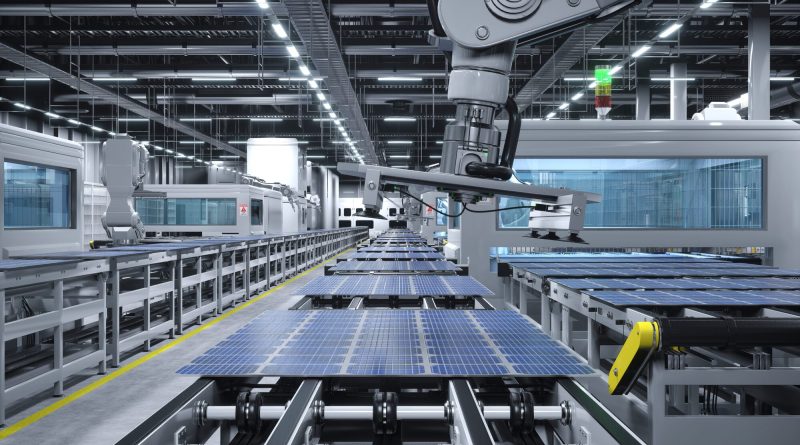
China has proposed new export controls on 12 solar manufacturing technologies, including processes used to produce high-efficiency solar cells, silicon wafers and polysilicon.
The proposals, announced on Oct. 16 by China’s Ministry of Commerce and Ministry of Science and Technology, would prohibit exports of certain manufacturing technologies while requiring government approval for others.
The measures form part of a wider review of 40 technologies covering solar energy, artificial intelligence and biomedicine. Public consultation will remain open until Nov. 15, 2026.
China’s Ministry of Commerce said the proposed changes are intended to address national security concerns as solar technologies find wider use in aerospace, defense and other sensitive sectors. The ministry also stated that the measures do not target any particular country, region or company.
The proposed restrictions concern manufacturing processes and technical knowledge rather than finished solar panels. This distinction is important for an industry that relies heavily on Chinese manufacturing expertise.
Although the proposed bans and licensing rules have not yet taken effect, a temporary registration requirement for certain technology transfers took effect on Oct. 16.
The proposed controls cover advanced solar manufacturing processes
The proposed measures would add 12 photovoltaic technologies to China’s Catalogue of Technologies Prohibited or Restricted from Export.
Among the technologies identified for possible export bans are manufacturing processes for perovskite and perovskite-silicon tandem solar cells. These technologies have attracted industry interest because they offer the potential to convert more sunlight into electricity than conventional silicon cells.
The proposals include manufacturing technologies for tandem solar cells built on silicon wafers measuring at least 182 millimeters and achieving conversion efficiencies of 30% or higher.
They also cover certain processes used to manufacture large-area perovskite solar modules. These include single-junction modules measuring at least one square meter with efficiencies of 18% or higher, alongside tandem modules of the same minimum area achieving efficiencies of at least 28%.
Polysilicon production technologies are also included. The proposals identify certain high-capacity fluidized-bed production processes, as well as methods for manufacturing silicon wafers measuring no more than 70 micrometers thick.
Other manufacturing technologies would face export licensing requirements rather than outright bans.
These include specified processes used to manufacture tunnel oxide passivated contact (TOPCon), heterojunction (HJT) and back-contact solar cells. They also include certain crystal-pulling and wafer-cutting technologies.
Under China’s existing technology export regulations, prohibited technologies cannot be transferred overseas. Restricted technologies require government approval and the necessary licenses.
The proposed controls would apply to technologies meeting defined technical requirements rather than all solar manufacturing equipment or production methods.
In the meantime, companies planning to transfer covered technologies overseas must comply with temporary registration requirements. These extend to intellectual property transfers, technology licensing and certain changes in foreign ownership or control.
Overseas solar manufacturers could face new technology transfer requirements
The proposed controls could affect companies developing solar manufacturing facilities outside China, particularly those that depend on Chinese technology suppliers.
China has a major position in global solar manufacturing, supported by extensive production capacity and expertise in the processes needed to produce solar cells and modules at scale.
For overseas manufacturers, access to this expertise can be important when establishing new factories or upgrading existing production lines.
A solar manufacturing project may require more than purchasing equipment. Companies can also depend on technical licensing, engineering support, production-line installation and specialist knowledge to operate manufacturing processes.
If the proposed rules are adopted, some of these activities could require government approval or become prohibited where they involve technologies covered by the new restrictions.
This could introduce additional requirements for overseas manufacturing projects, particularly those seeking to use Chinese production processes covered by the proposals.
However, the practical impact would depend on the technologies involved, the terms of existing agreements and how the final regulations are implemented.
The restrictions could also affect Chinese companies planning to establish production facilities overseas or enter partnerships with foreign manufacturers.
Such arrangements may involve transferring manufacturing knowledge between businesses or subsidiaries operating in different countries. The proposed controls could therefore introduce new compliance requirements for Chinese companies pursuing international expansion.
There is no clear basis at this stage for estimating how many overseas projects would be affected or whether the proposals would cause significant delays.
The draft restrictions would not prevent international manufacturers from using technologies developed independently or obtaining equipment and expertise outside the proposed scope.
The proposals could influence future investment in solar manufacturing
The announcement comes as governments and manufacturers seek to expand solar production capacity across multiple markets.
Investment in domestic manufacturing has become an important part of energy and industrial policy in several countries. These efforts aim to establish production facilities, develop manufacturing expertise and support growing demand for solar equipment.
China’s proposed export controls introduce another consideration for companies assessing these investments.
Manufacturers planning new facilities may need to review their dependence on technologies covered by the proposals. This could affect decisions about equipment suppliers, technical partnerships and the manufacturing processes selected for new production lines.
The potential implications may be particularly relevant to next-generation solar technologies.
Perovskite and tandem solar cells offer opportunities to improve the efficiency of photovoltaic products. However, moving these technologies from research and pilot production into large-scale manufacturing requires specialist equipment and technical knowledge.
Restrictions on the international transfer of certain manufacturing processes could influence where new production facilities are established and how quickly companies gain access to these technologies.
At the same time, restrictions on Chinese technology exports do not necessarily mean that solar panel supplies will decline or that equipment prices will increase.
Finished solar cells and modules fall outside the proposed restrictions, and manufacturers would remain able to use production methods that are not covered by the controls.
The proposals also leave scope for international technology cooperation in areas that do not fall within the specified restrictions.
For manufacturers, the immediate priority will be understanding which processes are covered and whether planned transfers require registration. Companies considering new facilities may also need to examine how licensing requirements could affect investment schedules and supplier agreements.
The public consultation period, which closes on Nov. 15, will provide an opportunity for industry participants to respond before the proposed changes are finalized.
Until then, the wider consequences for international solar manufacturing remain uncertain. The final scope of the regulations, and how Chinese authorities apply them, will determine their practical significance for companies developing solar production capacity overseas.
Source:
Yahoo Finance