US clean energy investment rises 22% in Q2 2026
Subscribe to our free newsletter today to keep up to date with the latest renewable energy news.
US clean energy and transportation investment reached $75 billion in the second quarter of 2026, up 22% from Q1 and 4% from a year earlier.
It was the second-highest quarterly total recorded by the Clean Investment Monitor. Clean investment also accounted for 5.2% of total US private investment in structures, equipment and durable consumer goods.
Yet the increase was not spread evenly across the sector.
Retail investment reached $41 billion, up 45% from the previous quarter and 21% year over year. It accounted for 56% of all clean investment during Q2.
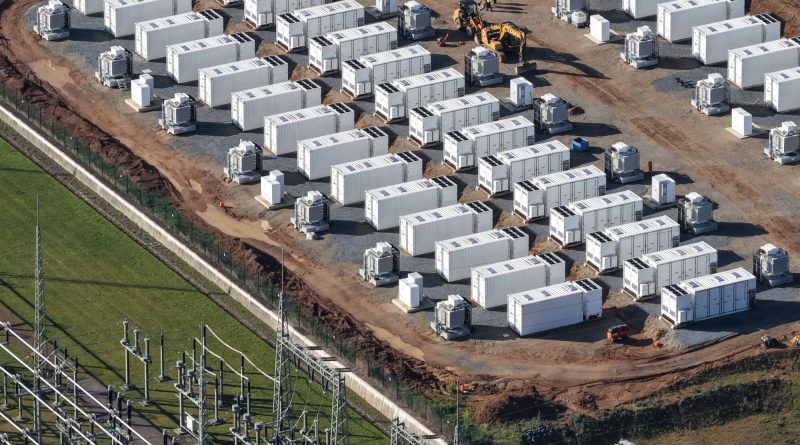
Battery storage was one of the strongest areas.
Investment in distributed electricity generation and storage reached almost $12 billion, up 128% from Q1 and setting a quarterly record. Residential batteries accounted for 75% of investment in the category and exceeded residential solar investment for the second consecutive quarter.
For new energy companies, the figures point to a shift in the US investment mix. More capital is flowing toward technologies that can store and manage electricity closer to where it is used.
Consumer demand is changing the investment mix
Electric vehicles remained the largest part of retail clean investment.
Spending on zero-emission vehicles reached about $23 billion in Q2, accounting for 55% of retail clean investment. That was up 28% from the first quarter, although spending remained 3% below Q2 2025.
Plug-in hybrid spending rose 68% quarter over quarter to $5 billion.
Heat pump investment also increased, reaching $7 billion. That was up 25% from Q1 and 4% from the same quarter last year.
These figures show how consumer spending is becoming a larger part of clean energy investment. The market is no longer shaped only by utility-scale renewable projects and large industrial plants. Household energy technologies, vehicles and distributed systems now account for a significant share of spending.
Battery storage sits across several parts of this shift. Batteries are used in electric vehicles, homes and utility-scale power systems. Growth across those markets could support demand throughout the battery supply chain.
But strong demand does not mean every part of that supply chain is expanding at the same pace.
Manufacturing improves after six quarters of decline
US clean technology manufacturing investment reached $8 billion in the second quarter, up 4% from Q1. The increase ended six consecutive quarters of decline.
The longer-term comparison was less positive. Manufacturing investment remained 24% below Q2 2025.
The EV supply chain accounted for 88% of clean manufacturing investment, at about $7 billion. Battery manufacturing attracted $5 billion, up 2% from the previous quarter but down 34% from a year earlier.
EV assembly investment remained broadly flat at $2 billion.
Solar manufacturing performed better during the quarter. Investment increased 30% from Q1 to almost $1 billion, although it remained 19% below its level a year earlier.
Wind manufacturing was much weaker. Investment fell 62% from the previous quarter and 59% year over year, leaving activity at a negligible level.
The figures indicate that the manufacturing downturn may be stabilizing, but they do not yet show a broad recovery. Battery manufacturing remains well below its 2025 level, while wind investment has fallen sharply.
There was a stronger signal in the project pipeline. More than $10 billion of new manufacturing investment was announced in Q2, the highest quarterly total in more than two years. Solar projects accounted for about $8 billion, or 77%, of those announcements.
The next test is how much of that announced investment reaches construction and production.
Project cancellations expose a more selective market
Large-scale energy investment was weaker than consumer spending.
Investment in clean energy production and industrial decarbonization totaled $25 billion during Q2. That was unchanged from the first quarter and 5% lower than a year earlier.
Utility-scale solar and storage accounted for $19 billion, while wind investment fell 19% from Q1 to $5 billion.
The project pipeline also showed signs of strain.
Developers canceled about $17 billion of previously announced clean electricity and industrial decarbonization investment during the quarter. It was the highest cancellation total recorded for that segment by the Clean Investment Monitor.
A $7 billion hydrogen project represented the largest share. Around $6 billion of storage projects and $3 billion of solar projects were also canceled.
Manufacturing cancellations added another $1.7 billion, including about $1.1 billion in solar manufacturing projects and $500 million in EV assembly.
The contrast is important. US clean energy investment is rising overall, but capital is moving unevenly across technologies and project types.
The stronger areas have visible near-term demand, including vehicles, residential batteries and distributed energy systems. Large projects face a different set of risks, including long development periods, policy exposure, financing needs and the need to secure customers before construction begins.
The Q2 data therefore show a clean energy market that continues to attract large amounts of capital while becoming more selective about where that money is committed.
For new energy companies, that shift may matter more than the headline 22% increase. Battery storage, consumer energy technologies and selected manufacturing projects are taking a larger share of investment, while weaker projects are being removed from the pipeline.
The next phase of US clean energy growth may depend less on how much investment is announced and more on which projects reach construction and operation.
Source