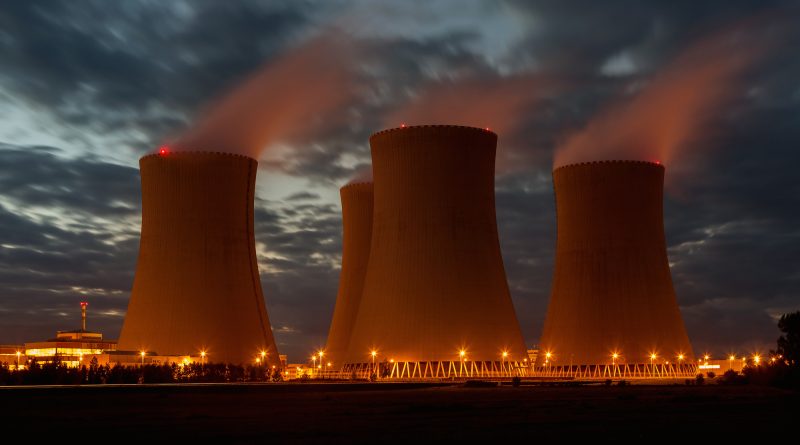
US backs $4.4bn effort to restart three nuclear power plants

Subscribe to our free newsletter today to keep up to date with the latest renewable energy news.
The United States is pursuing plans to reopen three previously closed nuclear power plants, supported by up to $4.4 billion in federal loans, as growing electricity demand and the expansion of AI data centers renew interest in nuclear energy.
The projects in Michigan, Pennsylvania and Iowa could restore approximately 2.25 gigawatts (GW) of generating capacity, enough to power an estimated two million homes and businesses.
The proposed restarts mark an unusual development for the US nuclear industry. No commercial reactor is known to have returned to electricity generation after entering the formal decommissioning process, although some have resumed operation following lengthy shutdowns.
The projects also reflect changing market conditions. Nuclear facilities that previously struggled to compete economically are attracting investment as technology companies seek reliable, low-carbon electricity to support increasingly energy-intensive operations.
Why nuclear power is attracting renewed investment
The growing electricity requirements of AI infrastructure and data centers are helping reshape the outlook for US nuclear generation.
Unlike solar and wind power, which depend on weather conditions, nuclear reactors can provide continuous electricity generation. This makes them attractive to large industrial and technology customers that require consistent power supplies.
Technology companies are increasingly entering long-term electricity purchasing agreements with nuclear operators, providing the revenue certainty needed to support significant investment.
Microsoft and Google are among the companies supporting nuclear restart projects through commercial agreements designed to secure low-carbon electricity from the wider power grid.
These arrangements do not necessarily involve supplying electricity directly from individual reactors to specific data centers. Instead, they provide financial support for nuclear generation while helping technology companies meet their long-term energy requirements.
The shift is particularly significant because all three reactors were closed at a time when their economic prospects appeared considerably weaker.
With electricity demand expected to increase, operators are reassessing whether previously retired facilities can return to profitable operation.
Three nuclear plants preparing to return to service
The Palisades Nuclear Plant in Michigan is the most advanced of the three projects.
Owned by Holtec International, the facility closed in 2022 after more than five decades of operation. Holtec subsequently began efforts to reverse its decommissioning and restore electricity generation.
The project is supported by approximately $1.5 billion in federal loan financing and additional state funding.
Fuel loading began in August 2026, but operations were interrupted after a previously used fuel assembly tilted inside the reactor vessel.
On October 13, the Nuclear Regulatory Commission (NRC) approved Holtec’s proposed alternative method for removing the assembly, allowing recovery work to proceed under regulatory oversight. The approval does not authorize the reactor to resume electricity generation.
Palisades has a contractual deadline to restart by March 2027, although its return remains dependent on completing the necessary work and satisfying regulatory requirements.
In Pennsylvania, Constellation Energy is working to restart the former Three Mile Island Unit 1 reactor, renamed the Crane Clean Energy Center.
The reactor closed in 2019 for economic reasons. It is separate from Unit 2, which was permanently shut down following the 1979 nuclear accident.
Constellation plans to invest approximately $1.6 billion in the restart, supported by a 20-year electricity purchasing agreement with Microsoft and a $1 billion federal loan. The company is targeting a return to operation in 2027.
Meanwhile, NextEra Energy is pursuing the revival of Iowa’s Duane Arnold Energy Center, which ceased operations in 2020.
The project is supported by a federal loan of up to $1.9 billion and a long-term electricity purchasing agreement with Google, with a restart targeted for no later than the first quarter of 2029.
Together, the projects represent a significant attempt to restore existing nuclear capacity at a time of growing pressure on US electricity supplies.
Could restarting old reactors offer a faster route to new capacity?
Reopening existing nuclear plants could offer an alternative to the lengthy and expensive process of constructing new reactors.
New nuclear projects typically require years of planning, construction, regulatory assessment and infrastructure development, often involving substantial financial commitments.
Existing facilities may already possess grid connections, cooling systems, transmission infrastructure and other equipment necessary for electricity generation.
Retaining this infrastructure can potentially reduce development costs and shorten project timelines compared with building an entirely new nuclear power station.
However, restarting a decommissioned reactor presents considerable technical challenges.
Operators must assess the condition of aging equipment, restore essential systems, undertake safety inspections and potentially replace components that have deteriorated during extended shutdowns.
They must also recruit and train employees, secure nuclear fuel and demonstrate compliance with regulatory requirements.
The complexity and cost of these activities depend partly on how far decommissioning has progressed, meaning some retired reactors may be significantly more difficult to restore than others.
As a result, reopening existing facilities is not necessarily a straightforward or inexpensive solution to rising electricity demand.
Safety and financial challenges remain
Despite renewed commercial interest, the projects face regulatory, technical and financial uncertainties.
The Palisades fuel-loading incident demonstrates how unexpected problems can disrupt restart schedules even after extensive preparation.
The NRC must ensure that operators meet applicable safety requirements before electricity generation can resume, including verifying the condition of plant equipment and the effectiveness of restored operating systems.
Aging nuclear infrastructure also raises questions about maintenance requirements, long-term reliability and the costs associated with extending plant operating lives.
Federal financing has prompted debate over whether public funds should support nuclear restart projects backed by major technology companies.
Supporters argue that government-backed loans can help bring reliable, low-carbon electricity capacity back into service and strengthen the country’s energy infrastructure.
Critics question whether the financial risks and costs of refurbishing aging facilities justify this level of public support, particularly when other energy technologies are competing for investment.
These considerations will remain important as the three projects advance toward their proposed restart dates.
What the nuclear restarts mean for the energy industry
If successful, the projects could demonstrate that changing electricity market conditions can make previously uneconomic nuclear facilities commercially viable again.
They may also encourage utilities and investors to reconsider the value of existing reactors, especially where major infrastructure remains intact and long-term electricity purchasing agreements are available.
However, the potential for widespread nuclear restarts is limited.
Only a relatively small number of retired reactors are likely to be suitable candidates, and each project would require substantial technical assessments, investment and regulatory approval.
Preventing economically viable nuclear plants from closing prematurely may therefore offer greater long-term benefits than attempting to restore them after decommissioning begins.
The three projects nevertheless highlight a broader shift in the US energy market.
As electricity demand from data centers, manufacturing and other industries increases, the ability to deliver reliable power is becoming an increasingly important consideration for energy developers and investors.
For the nuclear industry, this creates an opportunity to attract investment not only into new reactor technologies but also into existing generating assets.
Whether the Palisades, Crane and Duane Arnold projects meet their proposed timelines will provide an early indication of how significant nuclear restarts could become in meeting America’s future electricity needs.
Source:
AP News