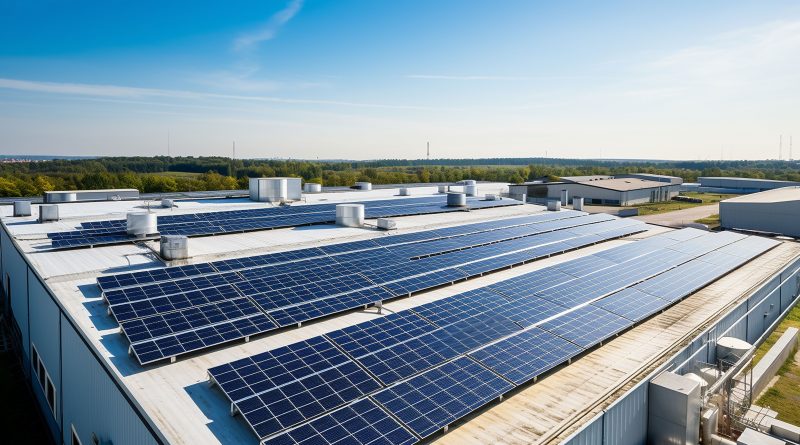
Top 5 ways businesses can cut energy bills with on-site solar

As energy costs remain a significant consideration for businesses across the UK, on-site solar is emerging as a practical way to reduce electricity expenditure and improve long-term financial resilience. From warehouses and manufacturing facilities to offices and retail premises, commercial solar installations allow organisations to generate clean energy directly where it is consumed.
The financial benefits extend beyond simply installing photovoltaic panels. Businesses can improve returns by aligning electricity consumption with solar generation, introducing battery storage, using intelligent energy management systems and selecting appropriate financing arrangements.
According to the UK government’s Solar Roadmap, published in 2025, rooftop solar could reduce annual electricity costs for suitable warehouses by between 40% and 80%, based on estimates from the UK Warehousing Association. Actual savings depend on factors including electricity demand, installation size and the proportion of generated power consumed on-site.
For organisations evaluating their energy strategies, five approaches can help maximise the commercial value of on-site solar.
1. Reduce grid electricity purchases through on-site generation
One of the most immediate financial benefits of on-site solar is the ability to replace a proportion of purchased grid electricity with power generated directly at business premises.
Commercial solar photovoltaic systems convert sunlight into electricity that can be consumed by equipment, lighting, heating and other operational infrastructure. Every kilowatt-hour used directly from the installation represents electricity that the business would otherwise need to purchase from its supplier.
This is particularly attractive for organisations operating during daylight hours, when solar generation often coincides with electricity demand. Warehouses, distribution centres, manufacturing facilities and supermarkets can offer suitable consumption profiles, although the economics vary between sites.
The potential savings can be substantial. The UK government’s 2025 Solar Roadmap highlights estimates that rooftop solar could reduce annual electricity expenditure for suitable warehouse facilities by 40% to 80%.
However, solar installations do not eliminate all electricity charges. Businesses generally remain connected to the grid and continue paying for imported electricity, standing charges and applicable network costs.
Installation design is therefore critical. Companies should assess historical electricity consumption, roof condition, available space, shading and grid connection requirements before investing.
A correctly sized system can maximise the proportion of generated electricity consumed on-site while avoiding unnecessary expenditure on generation capacity that delivers limited financial value.
For businesses with consistent daytime demand, on-site solar offers an opportunity to reduce exposure to future electricity price movements while supporting broader clean energy objectives.
2. Maximise savings by matching solar generation with business demand
Installing solar panels is only one part of reducing electricity costs. Businesses can generate additional savings by changing when they consume electricity.
Solar installations typically produce the greatest amount of power during daylight hours, with output influenced by weather conditions, season and panel orientation. Electricity consumed at the same time as generation can provide greater financial value than surplus electricity exported to the grid.
This creates opportunities for organisations to adjust operational schedules.
Manufacturers, for example, may be able to schedule energy-intensive processes during periods of stronger solar production. Warehouses could coordinate electric vehicle charging, while commercial buildings can optimise heating, cooling and ventilation schedules.
Energy monitoring is central to this approach.
By analysing half-hourly electricity consumption alongside forecast solar generation, businesses can identify periods when electricity demand exceeds available solar output and investigate whether some activities can be rescheduled.
The financial advantage depends on the difference between the cost of imported electricity and the payment received for exported power. Export arrangements and eligibility vary, particularly for larger commercial installations.
Businesses should therefore calculate the value of self-consumption using their actual electricity tariffs rather than assuming that every unit generated produces the same saving.
For organisations seeking to improve returns without expanding their solar installations, demand management can represent a relatively accessible opportunity.
3. Combine on-site solar with battery storage to cut peak energy costs
Battery energy storage systems can increase the flexibility of commercial solar installations by storing surplus electricity for use when generation falls or electricity prices rise.
Without storage, unused solar electricity is generally exported or curtailed, depending on the installation and connection arrangements. A battery allows businesses to retain some of that generation for consumption later in the day.
This can be particularly useful for organisations with substantial evening electricity demand or variable operating schedules.
Battery systems may also help businesses manage peak demand, depending on their electricity contracts and network charging arrangements. By discharging stored electricity during periods of high consumption, organisations may reduce certain demand-related costs.
However, batteries are not automatically financially beneficial for every solar installation.
The business case depends on equipment costs, battery capacity, charging and discharging efficiency, electricity tariffs, operating patterns and expected system life. Battery degradation and replacement requirements must also be considered.
A detailed financial assessment should compare the additional savings from storage against its capital and operating costs.
Businesses with time-of-use tariffs may find opportunities to combine stored solar electricity with lower-cost grid charging, although this requires appropriate controls and careful tariff analysis.
When properly specified, battery storage can turn on-site solar from a daytime generation asset into a more flexible component of a business’s wider energy strategy.
4. Use smart energy management to improve solar system performance
Digital energy management technologies can help businesses extract greater financial value from existing solar installations by improving visibility, identifying inefficiencies and coordinating electricity consumption.
Modern monitoring platforms provide detailed information about generation, consumption and system performance. This allows facilities managers to compare actual output against expected production and investigate unexpected reductions.
For example, underperforming inverters, electrical faults or excessive shading can reduce generation and increase reliance on grid electricity. Early identification can help prevent avoidable financial losses.
Smart energy management systems can also integrate solar installations with building management systems, battery storage and electric vehicle charging infrastructure.
Automated controls can schedule flexible electricity demand around forecast solar production, reducing the need to purchase power during more expensive periods.
Businesses operating multiple premises may benefit from centralised monitoring, allowing energy managers to compare site performance and prioritise improvements.
Maintenance remains important. Although solar panels require relatively limited routine intervention, inspections, inverter servicing and appropriate cleaning can help maintain long-term performance.
Organisations should establish clear performance indicators, including solar generation, self-consumption, grid imports and system availability.
By treating solar generation as an actively managed operational asset rather than a passive installation, businesses can identify savings opportunities throughout the system’s working life.
5. Choose the right financing model to unlock long-term savings
The financing structure of a commercial solar installation can significantly influence its financial attractiveness.
Businesses generally have several options, including outright ownership, asset finance, leasing arrangements and on-site power purchase agreements.
Purchasing a system outright provides direct ownership and allows the business to retain the financial benefits of generation, subject to operating costs and any financing commitments.
However, upfront capital expenditure can be substantial, particularly for larger industrial installations.
A power purchase agreement, or PPA, offers an alternative. Under a typical on-site PPA, a third-party provider finances and owns the installation while the business agrees to purchase generated electricity under a long-term contract.
This can reduce initial capital requirements and provide greater visibility over the cost of a proportion of electricity consumption.
Nevertheless, businesses should assess contract duration, electricity pricing mechanisms, maintenance responsibilities and arrangements if they relocate or sell the property.
Export income can provide another potential revenue stream. Ofgem’s Smart Export Guarantee requires participating suppliers to offer payments for eligible renewable electricity exported to the grid, including electricity from qualifying solar installations up to 5MW in Great Britain. Suppliers determine their own tariff rates and contractual terms.
Financial assessments should also consider equipment warranties, roof maintenance, insurance, tax treatment and future electricity price assumptions.
The most appropriate financing arrangement will depend on available capital, property ownership, energy demand and the organisation’s appetite for long-term contractual commitments.
Making on-site solar work financially
On-site solar can offer UK businesses a practical route towards lower electricity costs, improved energy resilience and cleaner operations.
However, maximising savings requires more than installing panels. Organisations must consider how electricity is generated, consumed, stored, monitored and financed.
The strongest business cases combine accurate demand analysis with appropriate system sizing and realistic financial modelling.
As commercial energy strategies evolve, businesses that integrate solar generation into wider operational planning will be better positioned to manage electricity expenditure while progressing towards their clean energy objectives.