Suniva raises $835 million for US solar cell manufacturing
Subscribe to our free newsletter today to keep up to date with the latest renewable energy news.
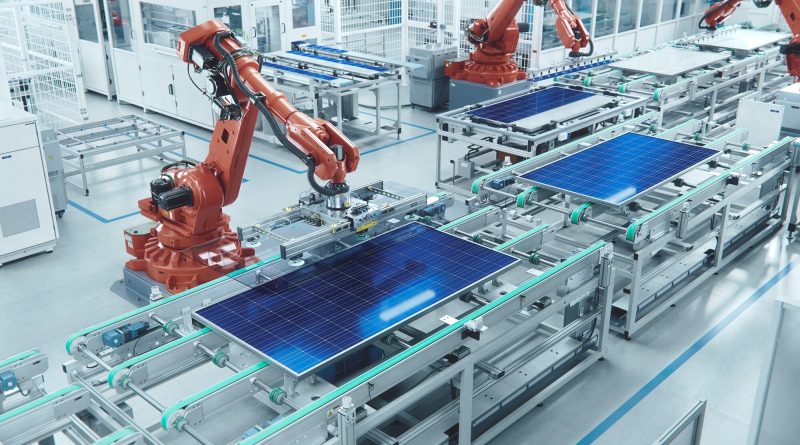
Suniva has completed an $835 million capital raise to fund a major expansion of solar cell manufacturing in the US, as manufacturers invest in parts of the supply chain that have long relied on imports.
The company plans to build a 4.5 GW solar cell plant in Laurens County, South Carolina. Combined with Suniva’s existing factory near Atlanta, the new site is expected to lift its annual US manufacturing capacity to more than 5.5 GW.
Suniva said the South Carolina project will involve about $600 million of investment and create 564 manufacturing jobs. Construction is expected to be completed in late 2027, with production increasing through 2028.
The financing gives the project a clearer route to production at a time when US solar manufacturing is expanding quickly. Yet it also points to a wider gap in the market. The US has added large amounts of module assembly capacity, while domestic production of solar cells and other upstream components remains less developed.
That gap is now attracting more investment.
Domestic module capacity has grown faster than solar cell production
US solar manufacturing has expanded sharply in recent years.
The country ended 2025 with 65.5 GW of annual solar module manufacturing capacity, up from 42.5 GW at the end of 2024. That marked an increase of more than 50% in one year.
Solar demand also remains high. The US installed 43.2 GW of solar capacity in 2025, while solar accounted for 54% of all new electricity-generating capacity added to the grid.
However, module capacity shows only part of the manufacturing picture.
A solar module is the finished panel installed at a project. Before that panel can be assembled, manufacturers need materials and components including polysilicon, ingots, wafers and solar cells.
US companies have increased production across more parts of that supply chain. Even so, cell manufacturing remains much smaller than module capacity.
Industry data published in March 2026 put operational US cell manufacturing capacity at about 3.2 GW, compared with about 66 GW of module capacity. A further 25 GW of cell capacity was listed as under construction.
Suniva’s planned 4.5 GW plant would therefore add a large amount of capacity to a relatively small part of the domestic supply base.
The South Carolina project is also larger than first announced.
In April 2026, Suniva said it planned a 4.5 GW factory with a projected opening in the second quarter of 2027. The company said the site would take its total capacity above 5.5 GW.
Its latest plans now point to completion in late 2027, followed by a production increase in 2028. Suniva has also put the investment at about $600 million.
The change is worth noting because factory announcements do not always translate directly into production. New plants must be completed, equipped, staffed and supplied before they can support domestic demand.
US-made components are becoming more important to project economics
Federal tax rules have also changed the economics of domestic solar manufacturing.
Projects that meet domestic content requirements may qualify for additional federal tax benefits. Eligible projects can receive a 10% increase to the production tax credit. Some investment tax credit projects can receive an additional 10 percentage points when other requirements are met.
The domestic manufacturing threshold has also been rising.
For projects covered by the relevant rules and beginning construction in 2026, the domestic manufactured-products threshold is 50%. It was 45% for projects beginning construction between June 16 and Dec. 31, 2025.
That gives solar developers a financial reason to pay closer attention to where components are made.
Cell supply is especially important because a panel assembled in the US can still contain imported parts. Expanding domestic cell production gives module manufacturers another source of US-made content and may help developers meet sourcing requirements.
However, tax policy alone will not decide whether new factories succeed.
Manufacturers also need enough orders to keep plants operating at high rates. They must manage production costs and compete with established overseas suppliers. Trade rules, tariffs and federal policy can also affect the cost and availability of imported materials.
Industry groups have warned that uncertainty over tax rules and trade policy could affect manufacturing investment. Actual US factory production also remains below domestic solar demand despite the rapid growth in announced and operating capacity.
Building capacity is only the first measure of progress
Suniva’s expansion shows how quickly the US solar supply chain is changing.
The company currently operates about 1 GW of solar cell manufacturing capacity at its Georgia facility. Adding 4.5 GW in South Carolina would increase its total annual capacity to more than 5.5 GW.
That would make Suniva a much larger supplier to US module manufacturers and add more domestic cell production at a point in the supply chain where capacity remains limited.
The size of the $835 million financing also shows that investors see a market for domestic cell production as US electricity demand rises and developers seek more locally made equipment.
Solar is expected to remain a major source of new power capacity. Current industry forecasts suggest the US solar fleet could nearly triple over the next decade, reaching about 769 GW.
That growth could support more domestic manufacturing, but new factory capacity will still need to turn into steady output.
For Suniva, the next milestones will be construction of the South Carolina plant, the planned production increase and the ability to secure enough customers to support 5.5 GW of annual capacity.
The same test applies across the wider market. The US has already attracted large investments in solar factories. The next phase will show how much of that planned capacity becomes reliable domestic supply.
Source