Strategic Biofuels advances carbon-negative energy projects through integrated power, sequestration, and a local partnership model
The transition to lower-carbon energy has revealed a gap between ambition and results. Power demand keeps rising as industry and digital infrastructure expand, while emissions targets get stricter. Communities want both economic returns and environmental benefits. Many projects address only one of these challenges. Few address all elements at once. Strategic Biofuels builds its business around this intersection, developing projects that integrate power generation, carbon sequestration, regional development and strong local support.
At the center of that effort is Chief Executive Officer and co-founder of Strategic Biofuels, Dr. Paul Schubert who leads the charge. He launched the company in 2020, amid the uncertainty of supply chains, investment hesitation, and evolving energy policy. “We started in very late 2020, right in the middle of Covid,” he recalls. From day one, Strategic Biofuels avoided a single-track approach. The team designed an integrated model in which feedstock, energy production, and carbon storage function as a single system.
Paul oversees strategy, partnerships, permitting, and financing. His job shows just how complex this business model is. Every decision ties technical design to market demand and community impact. In a sector where projects take years to launch, that alignment determines if a concept becomes a real asset.
Integrated design
Paul’s approach comes from a long, varied career in energy. “I’ve been in the petrochemical industry for about 40 years, and synthetic fuels for around 25, and then about a dozen years in renewables,” he shares. This experience shapes how he weighs risk and value. “One thing I realized in renewables: You must maximize the value of available carbon credits. To do that effectively, you really need to take on the challenge of carbon capture and sequestration,” he explains.
“The foundational idea for the company was that we would do CCS combined with the fuel production, and we quickly determined that clean power generation was going to be required,” Paul notes. Furthermore, “We needed to sit on top of the reservoir. That way, we wouldn’t need a long CO2 pipeline, and all the taxes and jobs would directly benefit the local community and ensure local support,” he points out. Keeping the higher economic impact of CO2 capture operations in the same community as the storage lowers infrastructure risk and drives economic activity in the region.
Experience has shown that infrastructure brings both resistance and opportunity. “In 2020 we did not foresee the level of opposition that would develop against CO2 pipelines and Carbon Capture and Sequestration (CCS),” Paul reflects. Fortunately, Strategic Biofuels had settled on a core mission of becoming a genuine community partner and centered its model on having a positive impact to the local community. “Delivering tangible local benefits, with all of the jobs and taxes staying in Caldwell Parish where our flagship Louisiana Green Fuels Project is located, proved critical to maintaining overwhelming community support,” he adds.
The Louisiana Green Fuels project brings Paul’s vision to life by combining a biomass-fired power plant with a geological storage system immediately beneath the site. Subsurface analysis by world-class partners built confidence in the system. Strategic Biofuels works with Stratum Reservoir and MetaRock Laboratories for rock mechanics data and core analysis, with Geostock Sandia providing highly specialized reservoir interpretation and experienced regulatory guidance, confirming both storage capacity and integrity.
Strategic Biofuels engaged SLB, to complete the FEED phase of engineering for the reservoir and the entire sequestration complex, and to provide long-term reservoir management services. This effort has yielded essential cost and schedule information for the build out and operation of the reservoir.
Land access forms another layer of execution. BETA Land Services in Lafayette, LA is a national leader in oilfield land services and manages the acquisition of pore-space rights and land agreements across the project footprint, ensuring that both surface operations and subsurface storage align with regulatory and operational requirements.
Strategic Biofuels matches this technical framework with a commitment to the Class VI Sequestration Well permit transparency. “We redacted nothing in the permit application even though there are provisions to do so by Louisiana’s Department of Conservation & Energy. Anything you want to know about the wells, the plans, or how we operate is public. We want everyone to know we’re transparent. Everything we have the authority to disclose in the permit is there,” Paul highlights. “We believe this approach has been essential in maintaining community support.”
Strategic shift
Market conditions soon nudged the Louisiana Green Fuels project in a new direction. “We were initially pursuing a biorefinery and made a shift to sustainable aviation fuel (SAF) because that seemed to have the most interest and potential,” Paul recalls. However, demand for SAF didn’t grow as expected, costs stayed high, and risk increased. The Strategic Biofuels team took a new approach. “Let’s do what makes sense and create things people really need and want to buy now,” he adds. “However, we are confident that the market for SAF is developing and its time will come.”
He links the pivot to power generation to broader trends. “What is going on in the world is a surging demand for electric power. Especially with data centers and hyperscalers – they mostly want low carbon footprint power,” says Paul. Strategic Biofuels reorganized the project into phases. The first phase now focuses on biomass power combined with CCS. The plant will generate over 100 megawatts of electricity, with power consumed on site by industrial users or exported to the grid.
Reliability supports that decision. “Wind and solar produce power only when the wind blows or the sun shines. Biomass power runs 24 hours a day, seven days a week,” Paul explains. Carbon capture changes the emissions profile of this power. “Because of carbon capture, it enhances carbon-neutral power to carbon-negative power, offering offsets to other higher-carbon power sources,” he continues. The facility will capture and store about 1.1 million metric tons of carbon dioxide each year.
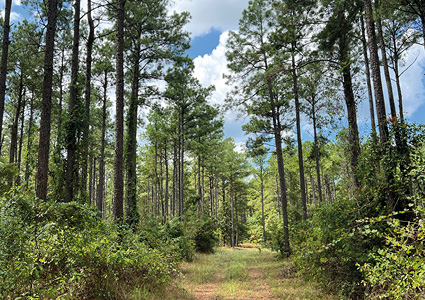
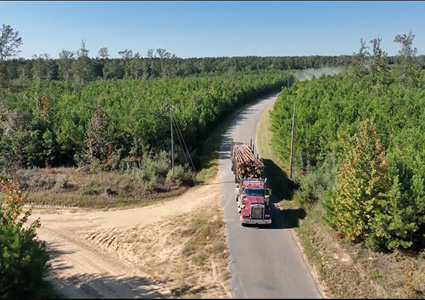
The use of forestry waste feedstock, desperately in need of a market, forms a key link between the facility and regional supply and deepens the bond with the community. The plant uses forestry thinnings from sustainable, managed pine forests. “People do not think about trees as crops, but they are row crops with about a 25-year crop cycle,” Paul notes.
Forest thinning produces material with limited uses. “It was once called pulpwood, but it’s become a massive oversupply problem with the closing of pulp mills. If not thinned the timber stand doesn’t grow to the height or diameter needed for high-valued commercial lumber. Failure to thin ultimately leads to disease, insect infestation, and increased risk of wildfire,” Paul observes. If thinned and left on the ground, the growth issue is solved, but the other risks remain. Strategic Biofuels sources this material through regional partners. Renewable Procurement Solutions (Good Hope Land & Timber and J&N Timber) manages harvesting and transport, connecting forest management practices and supply capability with plant operations. ResourceWise supports the supply chain with data and analysis through its subsidiaries, assessing availability, pricing, and compliance with low-carbon standards. These inputs help with feedstock planning and economic modeling.
Execution focus
Turning the model into a working facility means managing technical, commercial, and regulatory detail simultaneously. Paul puts it simply. “Our approach has been to de-risk everything we can,” he explains. Strategic Biofuels works to align technical, commercial, and regulatory elements early in the process. Subsurface validation, feedstock supply agreements, and engineering design move in parallel rather than sequentially. Running these in parallel reduces uncertainty as the project advances toward construction in a constantly evolving economic landscape.
Permitting represents a key milestone. Strategic Biofuels drilled an early Class V stratigraphic test well and secured a draft Class VI sequestration permit, advancing it through public review. “We had 21 people or groups testify in favor of the project and only three in opposition at the State’s Public Hearing for the permit,” Paul reports. That’s vastly different from most others. The outcome reflects sustained engagement with the community.
Safety forms a key part of that conversation. “Opposition to CO2 on the basis of safety has been focused on CO2 pipeline risk and the potential for CO2 escape into the drinking water aquifer. By design, we don’t need the large diameter CO2 pipelines people have concerns about. The CO2 leakage was de-risked because the two main leak paths of geologic faults and deep legacy wells are both absent in our injection zone and in our area of Caldwell Parish. We gained the early support of the community water district by informing them with facts and information. They’ve never wavered,” Paul notes. That perspective informs how the company communicates risk and supports regulatory approvals.
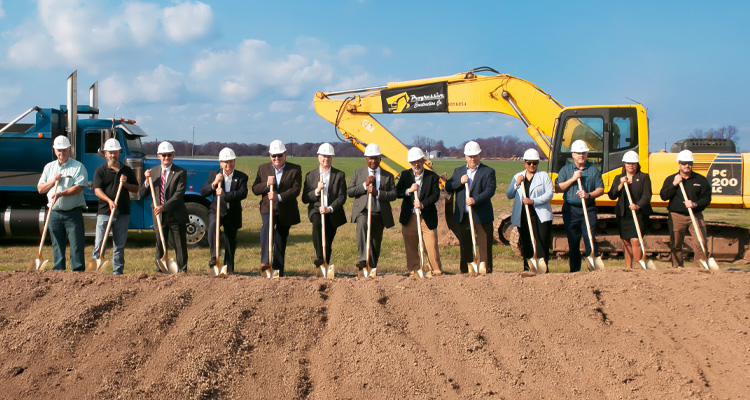
Execution also depends on infrastructure developed with regional partners. Roads, rail access, and port facilities must be ready alongside the plant. “If they are not on schedule, we cannot be on schedule,” Paul remarks. “We’ve partnered with the publicly-owned Port of Columbia, our host site, and they’ve successfully secured about $50 million in State and Federal grants for infrastructure improvement projects, which are already in progress.”
The business model extends across several revenue streams. Alongside electricity sales, the project will generate renewable energy certificates and durable carbon removal credits in the private markets. It also qualifies for federal tax incentives tied to carbon sequestration.
The storage reservoir provides capacity beyond the plant’s immediate needs. “We are permitted for four million metric tons per year. That means we have excess capacity available for further industrial development and expansion,” Paul clarifies. Strategic Biofuels plans to use that capacity for its own future phases and for third-party customers. It encourages co-location as part of that strategy. “We want industry and people to locate in Caldwell Parish so we do not need a CO2 pipeline,” he adds.
Looking ahead
The project timeline extends toward the end of the decade. Operations are expected at the end of 2029, with ramp-up in 2030. The first phase establishes power generation and carbon storage and lays the foundation for expansion.
Paul places the current position within that path. “We are in a good place now,” he reflects. From there, Strategic Biofuels plans to scale capacity, develop partnerships, and identify additional locations where the integrated model can be applied. Fuel production remains on the horizon, ready to scale when markets align.
At the center of that direction is a view shaped by experience and market signals. As Strategic Biofuels moves toward execution, that principle continues to guide decision-making. “It’s essential to make things people actually want to buy,” Paul concludes.