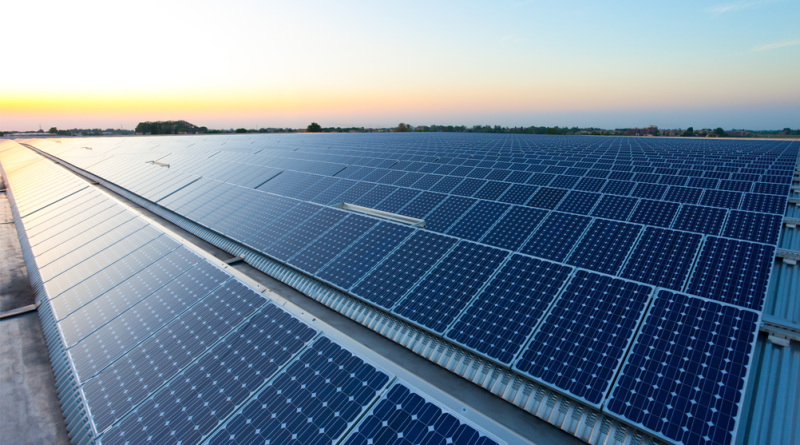
Solar helps drive 11% rise in US renewable power generation

Subscribe to our free newsletter today to keep up to date with the latest renewable energy news.
Renewable electricity generation in the United States continues to gain momentum, with output rising more than 11% during the first quarter of 2026. The latest figures point to a power market undergoing structural change, driven by rapid solar deployment, expanding battery storage capacity and the continued decline of coal-fired generation.
For utilities, industrial energy users and investors, the significance extends beyond a single quarter of strong performance. The data indicate renewable technologies are becoming a central part of the country’s electricity system rather than supplementary sources of power. As project pipelines expand and storage technologies mature, renewable energy is moving closer to the center of long-term energy planning.
The latest growth comes as electricity demand is expected to increase from data centers, manufacturing investment and electrification initiatives. Against that backdrop, renewable energy developers are scaling projects at a pace few conventional generation technologies can match.
Solar power has become the primary growth engine of US renewables
The strongest contributor to recent renewable growth was utility-scale solar generation, which increased by nearly 24% during the first quarter. Small-scale solar installations also delivered double-digit growth, reinforcing the technology’s expanding role across commercial and residential markets.
Solar’s rise reflects several converging factors. Equipment costs have fallen substantially during the past decade, project development processes have matured and corporate demand for clean electricity continues to increase. Many businesses now view renewable energy procurement as both a sustainability initiative and a cost-management strategy.
Large utility-scale projects have become particularly attractive because of their ability to deliver electricity at competitive prices. In many regions, solar projects rank among the lowest-cost forms of new electricity generation. Developers continue to secure long-term power purchase agreements with utilities and major corporations seeking predictable energy costs.
Growth has also become more geographically diverse. While Texas and California remain dominant markets, solar expansion is increasingly visible across the Midwest, Southeast and parts of the Mountain West. Improvements in grid infrastructure and transmission planning are helping support this broader expansion.
Hydropower also posted a strong performance, with generation increasing by more than 20%. Although hydropower growth often depends on seasonal conditions, its contribution demonstrates the value of maintaining a diversified renewable portfolio capable of balancing different generation characteristics.
Taken together, these trends show renewable growth is no longer dependent on a single technology. Multiple renewable sources are contributing to a broader transformation of the electricity mix.
Battery storage and grid modernization are becoming critical infrastructure
Utility-scale battery storage capacity expanded by approximately 8.5% during the first quarter, continuing a trend that has accelerated across the US energy market. Storage is increasingly viewed as a necessary complement to renewable generation, particularly as solar and wind account for a larger share of electricity production.
Unlike conventional power plants, renewable resources generate electricity according to weather and environmental conditions. Storage systems help address this challenge by capturing excess electricity during periods of strong production and releasing it when demand rises or renewable output declines.
For grid operators, battery storage provides flexibility that improves reliability and supports more efficient use of renewable resources. Storage can also help reduce price volatility during periods of peak demand while limiting dependence on older and less efficient generating assets.
Investment activity reflects this growing importance. Utilities, independent power producers and infrastructure funds are allocating substantial capital toward storage projects alongside renewable developments. Increasingly, solar projects are being designed with integrated storage systems, creating assets capable of delivering electricity more consistently throughout the day.
This evolution is beginning to change how renewable projects are evaluated. Success is no longer measured solely by generation capacity. The ability to provide flexible, dispatchable power is becoming equally important as energy systems grow more complex.
Coal’s decline highlights a changing power market
The rise of renewable generation is occurring alongside a continued decline in coal-fired electricity production. Coal generation fell by more than 11% during the first quarter, extending a long-running trend that has reshaped the US power sector during the past decade.
More significant is the growing gap between coal and renewable generation. Wind and solar combined generated more than 31% more electricity than coal during the reporting period, highlighting the scale of the market transition already underway.
Several factors are driving coal’s decline. Economic pressures remain a primary consideration, as many renewable projects can now compete effectively with conventional generation on cost. Utilities are also facing increasing pressure to modernize aging generation fleets while responding to customer demand for cleaner energy sources.
For industrial energy consumers, the shift has important implications. Companies with large electricity requirements are increasingly evaluating renewable procurement strategies as part of broader efforts to manage operational costs and reduce exposure to fuel price fluctuations.
The changing generation mix also affects investment decisions throughout the energy value chain. Infrastructure developers, equipment manufacturers and technology providers are adjusting strategies to align with a market increasingly focused on renewable growth and grid modernization.
Industry forecasts indicate that approximately 80 GW of new renewable capacity could be added across the United States during 2026, suggesting current growth rates may continue throughout the year.
Such expansion carries implications far beyond electricity generation. Renewable energy development is supporting manufacturing investment, creating construction jobs and driving demand for new transmission infrastructure. Supply chains associated with solar modules, battery systems, electrical equipment and grid technologies are becoming increasingly important components of the broader energy economy.
The growth also supports energy security objectives. A more diverse generation portfolio can reduce exposure to fuel supply disruptions while creating greater flexibility within the electricity system. Combined with storage deployment and transmission upgrades, renewable energy is becoming an increasingly important part of long-term infrastructure planning.
Challenges remain. Transmission constraints, permitting delays and supply chain pressures continue to affect project development timelines. Grid operators must also manage increasing complexity as larger volumes of variable generation enter the system.
Even so, the direction appears increasingly clear. Renewable energy is moving beyond a phase of rapid expansion into one of structural importance. Solar, wind, hydropower and storage are collectively becoming foundational components of the US electricity market.
As electricity demand continues to rise and investment capital flows toward clean energy infrastructure, the sector’s ability to scale efficiently will play a major role in shaping the future of American power generation. The latest growth figures suggest that the transition is already well underway.
Sources
Renews