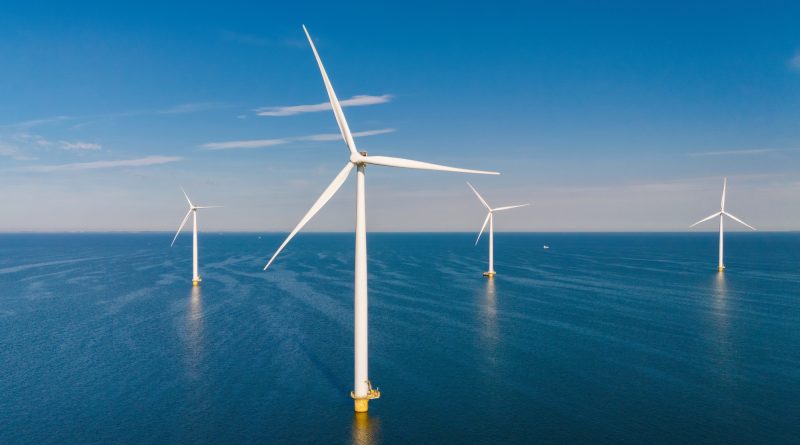
Revolution Wind is the first large US offshore wind farm at full power

Subscribe to our free newsletter today to keep up to date with the latest renewable energy news.
Revolution Wind is now fully operational, making the 704-megawatt project off Rhode Island the first large-scale offshore wind farm in the US to run at full power.
The 65-turbine wind farm, developed by Danish company Ørsted, can generate enough electricity for about 350,000 homes. Under contracts with utilities in Rhode Island and Connecticut, it is expected to meet 20% of Rhode Island’s electricity demand and 5% of Connecticut’s.
There are 2 milestones in the timeline worth separating. Ørsted’s interim report for the first 9 months of 2026, published Nov. 5, said the project reached commercial operations under its Connecticut and Rhode Island offtake contracts in October, after the last of its turbines were installed. The company has since confirmed the full-power milestone. Revolution Wind first began sending electricity to the New England grid in March.
Before this, the only fully operating offshore wind farms in the region were Block Island and South Fork Wind, which generate a combined 162 megawatts. Revolution Wind alone has more than 4 times that capacity.
How the project reached this point is the bigger story.
Revolution Wind survived 2 federal stop-work orders
Twice, in August 2025 and again in December 2025, the Interior Department ordered construction on Revolution Wind to stop, citing unspecified national security concerns. Both orders disrupted work, cost Ørsted money, and kept hundreds of people out of work. In both cases, federal judges ruled that the developer could resume building.
The legal fight is not over. The Trump administration has said it wants to reevaluate a key permit issued under the Biden administration, and that case is still moving through the courts.
Opponents back that effort. Michael Lombardi, president of Green Oceans, a nonprofit that opposes offshore wind, said his group supports the request to reevaluate the project’s operations permit, arguing that the wind farm harms fishermen and the environment.
Supporters expect the project to prevail. Katie Segal, senior director of offshore wind for the Environmental League of Massachusetts, said the courts have repeatedly found the administration’s legal arguments weak. “This is a huge moment for the region and for offshore wind,” she said.
For developers, the lesson cuts both ways. Court rulings have so far kept US offshore wind projects moving, but each intervention adds delay and cost, and a wind farm that is already generating power can still face a challenge to its permits.
Ørsted’s own results show the financial strain on its US business. Its profit for the first 9 months of 2026 fell by DKK 3.9 billion to DKK 2.6 billion, mainly because of non-cash impairments linked to interest rate increases on its US projects.
Ratepayer savings put affordability at the center of the offshore wind debate
The Connecticut Department of Energy and Environmental Protection expects Revolution Wind to save ratepayers across New England about $500 million a year by 2028.
That projection gives offshore wind’s backers an affordability argument to set against the federal government’s efforts to halt the project. Rhode Island Gov. Dan McKee called the wind farm “a major win for Rhode Island’s workforce and our state’s energy future.”
The workforce case is concrete. More than 1000 union workers built Revolution Wind, according to Ørsted, many of whom spent extended periods offshore building the turbines and laying the export cables. The company also invested $120 million to help redevelop ports in Connecticut and Rhode Island that supported construction and could serve future offshore wind projects.
Wind is also making a measurable contribution to the regional grid. In late October, wind power in New England peaked at 2400 megawatts, a record for the region.
Vineyard Wind and Sunrise Wind will show whether the momentum holds
Revolution Wind will not be alone for long if the next projects stay on schedule.
Vineyard Wind, the first US offshore wind project to receive a federal permit, is expected to reach full power soon. All 62 of its turbines are built, and many have been sending power to the grid for more than a year. At full output, the 800-megawatt project will supply enough electricity for 400,000 homes in Massachusetts.
Sunrise Wind, Ørsted’s 924-megawatt project, has finished installing all of its foundations. The company expects to complete it in 2027 and begin delivering power to Long Island.
Whether those projects finish without fresh federal intervention is still an open question. So is the outcome of the permit challenge facing Revolution Wind, a case that will show whether an operating offshore wind farm can have its approvals reopened after the turbines are turning.
Beyond Vineyard Wind and Sunrise Wind, the larger test for US offshore wind is whether developers will commit to new projects while that question remains unsettled.
Source:
WBUR
Ørsted interim report