Perpetual Next is pioneering biomethanol innovation to turn waste into opportunity

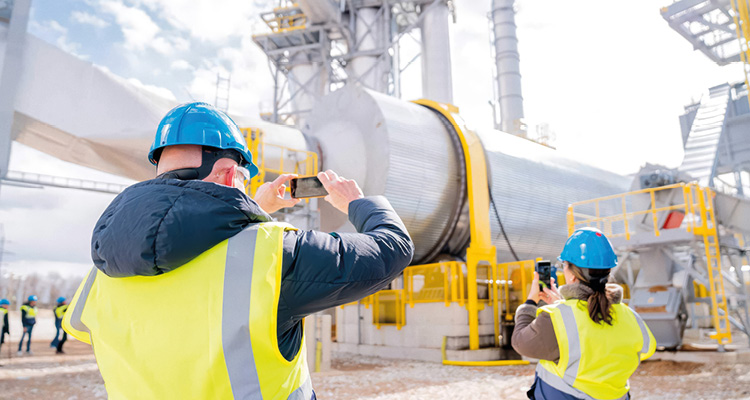
Committed to helping global industries redefine how they source raw materials, Perpetual Next is a key pioneer in biomethanol production. Built on the belief that organic residues should not be wasted, but rather transformed, the company is committed to changing the narrative on organic waste on an industrial and international scale. By converting organic waste streams into high value biocommodities, Perpetual Next asks the question: What if waste was no longer the end of a lifecycle, but the beginning of a new one?
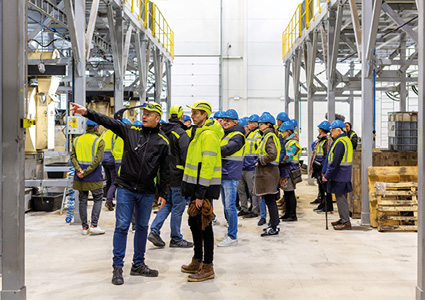
With five industrial scale green methanol facilities across the globe – which the company builds, owns, and operates – Perpetual Next’s mission aligns with a broader global imperative to invest what remains of our fossil resources into building a sustainable, carbon-neutral future. Using both proprietary in-house and externally sourced technologies, the organization extracts the highest possible value from organic waste and prevents carbon from returning to the atmosphere. Through this unique operation, Perpetual Next is actively driving the shift towards fossil-free, circular production, supporting both resource security and sustainable climate mitigation. New Energy Today sits down with Rene Buwalda, Founder and Chief Executive Officer of Perpetual Next, to dive deeper into the company’s growth, development, and, most importantly, the positive environmental impact that it is creating.
“Perpetual Next was established in 2017. In 2019, however, we made the shift from being a renewable energy company to a material transition company,” Rene begins, recounting the company’s journey thus far. “We chose a commodity product: biomethanol. We chose biomethanol because there was already a strong infrastructure available, making it easy to trade overseas.
“Today, we make biomethanol from waste products and have developments in the Netherlands, Poland, Estonia, and the United States. We invested more than €200 million on our blueprint model – based on 220,000 tons of biomethanol yearly – and have since invested another €100 million in Estonia to make it happen. We currently have seven developments in progress and aim for an annual production of one million tons of green methanol. The biggest capex of the project is proven technology, both in terms of the feedstock and the whole system itself.”
Guided by proven, value-driven innovation, Perpetual Next is leading a wider strategic rationale about the role of carbon in the energy transition. These investments and project progressions are addressing fundamental challenges in how to sustainably source and utilize carbon and form a key part in the company’s long-term vision.
“When I established the company, I learned that there was so much competition in alternative energy sources – windmills, solar panels, hydrogen – but you cannot build materials out of electricity; you always need that carbon molecule. That’s exactly what we produce; methanol is the transport product to carry the carbon molecules,” Rene explains. “Fossil-origin carbon is fine if you’re able to make something out of it, but in the end, it will just be incinerated and produce more CO2. In the circular chain that we’re creating, we aim to replace this fossil carbon with renewable carbon. It’s not just about sustainability but also availability and independence, assessing whether we can source carbon from local areas as opposed to further overseas. That’s the reason why we’ve developed two biomethanol facilities in the Netherlands – to allow us to also import carbon from the United States to Europe to produce biomethanol.”
This carbon circular chain informs how Perpetual Next’s projects are designed, financed, and brought to market, building upon a strong foundation of technical reliability and industrial credibility.
“If you want your project to be financed, the first thing to ask is whether your technology is proven. If it’s not proven, you’ll have to either pay more for your loan or will be ignored completely because of risk. That’s why I chose to use gasification and methanol synthesis technologies that already had decades of success in the market, though not on bio-feedstock,” Rene elaborates. “That’s where torrefaction kicks in, which makes the same product as fossil-origin coal. Because our technology is proven and already has the backing of the industry behind it, we were deemed at TRL9 (Technical Readiness, Level Nine) – the highest level you can reach in the financial world – which means that our facilities are already considered commercially viable.
“As we launched our pilot projects and secured backing from investors, we chose to upscale our projects alongside key market partners, such as TSI. They are extremely knowledgeable in manufacturing these types of facilities and combined with our knowledge and IP, it’s a partnership made in heaven. This relationship has made us stronger in the market as we create our first commercial development in Estonia.”
New regions
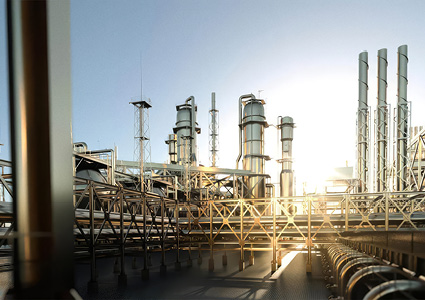
Building on the momentum of its existing commercial developments, Perpetual Next is now focused on replicating and adapting this proven model in new regions. This strategy allows the company to scale efficiently whilst leveraging specific industrial and logistical advantages of each site.
“Our next development, which based on that same blueprint, is in Poland. The site is located where there is an old, demolished coal-fired plant, so we can use and redevelop the existing infrastructure and transport biocoal to the location,” Rene reveals. “We’re also looking to develop biomethanol locations in the United States. Right now, we identified a place where the chemical industry is expanding and the infrastructure is suitable. I’d be looking to refine it to a circular area of roughly 200 kilometers; I traveled around a lot to find the right spot.”
As industries worldwide grapple with reliability constraints, regulatory changes, and unproven decarbonization strategies, Perpetual Next is providing a new path to a sustainable future. By reframing waste as a valuable resource and embedding circularity at the core of its operations, the company’s focus on proven technologies, strategic partnerships, and scalable project models demonstrates that sustainability and commercial viability are not mutually exclusive but rather open the doors to new innovation.
Looking ahead, the company’s continued expansion across Europe and into the United States signals growing confidence in biomethanol as a critical enabler of the material transition.
“In the future, we hope to see the market shifting to non-fossil-origin carbon. Over the last two years, the shipping industry has been focusing on methanol due to regulatory constraints, but while the IMO is postponed, the fuel IU system is still in place. I believe that the shipping industry – as well as the chemical, road, and SAF industries – will move towards more sustainable carbon options as regulations evolve,” Rene affirms.
Above all else, Perpetual Next is redefining the role of carbon in today’s industrial landscape, shifting it from a source of emissions to a cornerstone of circular production. If successfully scaled, its model has the power to reshape how industries think about waste and completely revolutionize the future of sustainable manufacturing.