Norway’s wealth fund buys 10% of battery storage developer Aypa Power

Subscribe to our free newsletter today to keep up to date with the latest renewable energy news.
Norway’s sovereign wealth fund has bought a 10% stake in Aypa Power, a North American battery storage developer, in what it calls its first direct investment in battery storage.
Norges Bank Investment Management (NBIM), which manages the fund, paid $300 million for the stake as a co-investor alongside Brookfield. The agreement was signed and completed on Oct. 28, and NBIM announced the deal on Nov. 4.
The new stake sits on top of an existing indirect position. NBIM already had exposure to Aypa through Brookfield’s Global Transition Fund strategy, the vehicle Brookfield is using to buy the company from funds managed by Blackstone Energy Transition Partners.
Its price lines up with the deal Brookfield struck in July. Brookfield agreed to acquire Aypa for an equity value of $3 billion, or about $7 billion in enterprise value at closing. Paying $300 million for 10% implies the same $3 billion equity valuation.
The sum is small for a fund of this size. The signal it sends about battery storage is larger.
Aypa Power gives the fund scale in North American storage
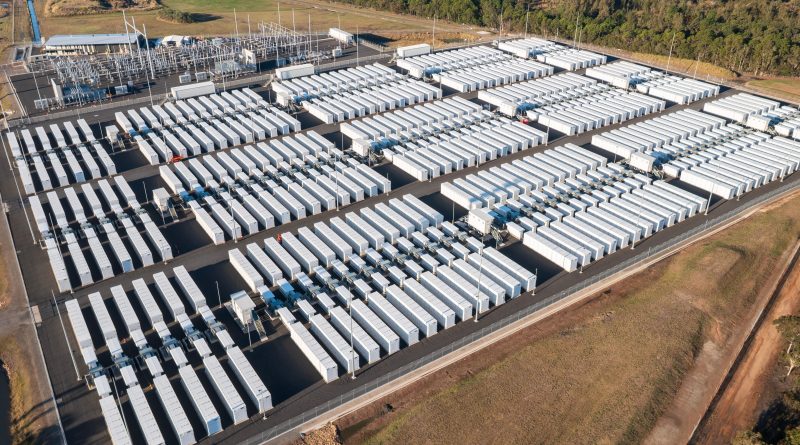
Aypa is a substantial platform. It has about 6.5 GW of operating, under-construction, and contracted battery storage capacity across the US and Canada, along with a development pipeline of more than 20 GW.
Brookfield described Aypa in July as the largest standalone battery storage developer in North America. The sale includes the project portfolio, the development platform, and a team of roughly 200 people. Brookfield said Aypa’s assets sit in regions where transmission and capacity are constrained, which is where storage tends to earn the most.
Much of the appeal lies in how predictable the revenue is. According to Brookfield, 95% of Aypa’s operating and under-construction portfolio is contracted under long-term agreements with investment-grade customers, with an average remaining contract life of 17 years.
That profile matters to a long-term investor. Batteries that rely on buying cheap power and selling it at peak prices can see earnings swing from year to year. Long-term contracts put a floor under that risk and make storage look more like the infrastructure assets that pension and sovereign funds already hold. Lenders are reaching a similar view, as Flatiron’s $850 million financing for a Massachusetts battery project shows.
Battery storage is moving into the core of renewable portfolios
NBIM framed the deal as a portfolio decision rather than a one-off.
“This is our first dedicated investment in battery storage. Storage is becoming an essential part of the energy system as the share of renewable generation grows, and it complements our existing wind and solar portfolio,” said Harald von Heyden, Global Head of Energy and Infrastructure at NBIM.
The logic is straightforward. Wind and solar output rises and falls with the weather and the time of day. Batteries store power when it is plentiful and release it when demand peaks, which supports grid reliability and the value of the generation around them.
NBIM has been moving toward this point for some time. Earlier this year, it signaled that it wanted to make its first investments in battery storage.
Both the buyer and the seller of Aypa make a similar case. Blackstone’s Bilal Khan and Mark Zhu said they had backed Aypa on the view that storage would become increasingly important to grid reliability and to meeting rising electricity demand from AI and other uses. Brookfield plans to pair Aypa with its wider energy business to supply what it calls integrated energy solutions to utilities, corporations, and other large power buyers.
For NBIM, the co-investment route also extends an existing relationship. The fund said it was pleased to expand its partnership with Brookfield, and investing alongside an established owner gives it a way into storage without building a platform of its own.
The harder test for Aypa is growing its pipeline
Several questions remain open.
Aypa’s development pipeline is more than 3 times the size of its current operating, under-construction, and contracted base. Turning that pipeline into built projects will depend on grid connections, equipment supply, and finding long-term buyers for the capacity.
Revenue is another open question. As more batteries connect to the same power markets, the price gaps they rely on can narrow. Aypa’s existing contracts cushion that risk for now, but new projects will need contracts of their own.
Then there is the question of scale for NBIM itself. The fund has described storage as a complement to its wind and solar holdings. Whether this $300 million position stays a single co-investment or becomes the start of a larger storage allocation is something it has not yet said.
Source:
Norges Bank Investment Management
Brookfield press release (SEC filing)