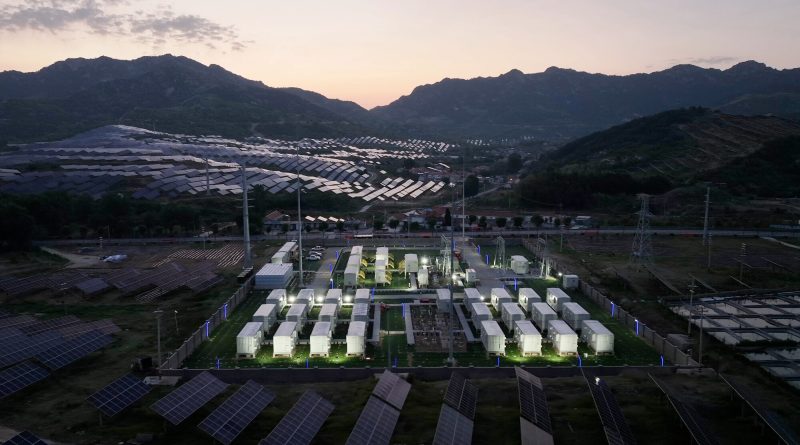
Masdar secures $6.1B for 24/7 renewable energy

Subscribe to our free newsletter today to keep up to date with the latest renewable energy news.
Masdar’s latest financing milestone represents more than another renewable energy investment. It signals growing confidence that solar power paired with battery storage can begin delivering one of the electricity sector’s most sought-after goals: dependable clean power around the clock.
The Abu Dhabi-based renewable energy company has reached financial close on a $6.1 billion project combining 5.2 gigawatts of solar photovoltaic generation with 19 gigawatt-hours of battery energy storage. Once operational, the development is expected to supply up to 1 gigawatt of continuous renewable electricity, making it the world’s first gigascale 24/7 clean energy project.
The financing package includes more than $5.1 billion in debt from a consortium of international and regional lenders, while Masdar is contributing about $1 billion in equity. Scheduled for completion in 2027, the project has attracted attention because it addresses one of renewable energy’s longstanding limitations: intermittency.
Rather than generating electricity only when the sun is shining, the combination of utility-scale solar and battery storage is designed to provide reliable power day and night. If successful, the model could influence how utilities, investors and policymakers approach renewable infrastructure.
How Masdar is attempting to solve renewable energy’s biggest challenge
Renewable energy has expanded rapidly over the past decade, with solar becoming one of the world’s lowest-cost sources of electricity. Reliability, however, remains a challenge. Electricity demand rarely aligns with periods of peak solar generation, forcing grids to rely on fossil fuel generation or other sources when renewable output falls.
Battery energy storage has emerged as the leading solution to narrow that gap. By storing surplus electricity generated during daylight hours and releasing it later, battery systems allow renewable assets to operate more consistently and support grid stability.
Masdar’s project pushes that approach to an unprecedented scale. Its 5.2 GW solar installation will be supported by one of the world’s largest battery storage systems, capable of storing 19 GWh of electricity. Together, the facilities are designed to deliver 1 GW of continuous clean electricity every hour of the day.
The project was developed with Emirates Water and Electricity Company as part of the UAE’s broader strategy to expand renewable generation while maintaining energy security. It also supports the country’s long-term objective of reducing emissions and strengthening its position as a global clean energy investor.
While solar and battery projects have been deployed elsewhere, few have attempted continuous utility-scale renewable generation on this scale. The industry will be watching closely to see whether the project establishes a new benchmark for dependable renewable power.
Why investors are backing round-the-clock renewable power
The financing structure reflects growing lender confidence in battery-supported renewable projects. Large infrastructure developments have traditionally relied on mature technologies with predictable revenue streams. Battery storage has only recently reached the level of commercial maturity required to attract financing at this scale.
The consortium supporting Masdar includes major international and regional financial institutions, demonstrating confidence in both the project’s engineering and its long-term commercial prospects. It also reflects a broader shift in how investors view energy storage, moving from a supporting technology to a core part of future electricity systems.
Electricity demand is expected to continue rising as economies expand, transport electrifies and artificial intelligence drives new data center construction. Reliable renewable generation is becoming increasingly valuable as utilities seek cleaner sources capable of responding to changing demand throughout the day.
Battery technology has also matured rapidly. Falling costs, stronger operating performance and increasing deployment have improved confidence among lenders and infrastructure investors, making projects of this size more commercially attractive.
What this project could mean for the global energy transition
If Masdar’s development performs as planned, it could provide a blueprint for future renewable infrastructure worldwide. Continuous renewable electricity has long been considered one of the remaining challenges in reducing dependence on conventional fossil fuel generation.
Countries with abundant solar resources may increasingly consider pairing large photovoltaic installations with battery storage instead of developing standalone renewable assets. Although these projects require significant upfront investment, they offer the potential to improve grid reliability while reducing reliance on natural gas during periods of lower renewable output.
Questions remain over long-term operating costs, battery replacement cycles and whether similar developments can be replicated in regions with different weather conditions or electricity market structures. Even so, reaching financial close marks an important milestone for renewable project finance and utility-scale battery deployment.
For Masdar, the project reinforces its position as one of the world’s leading renewable energy developers. For the wider energy industry, it highlights a shift from simply generating clean electricity toward delivering dependable renewable power whenever it is needed.
Source