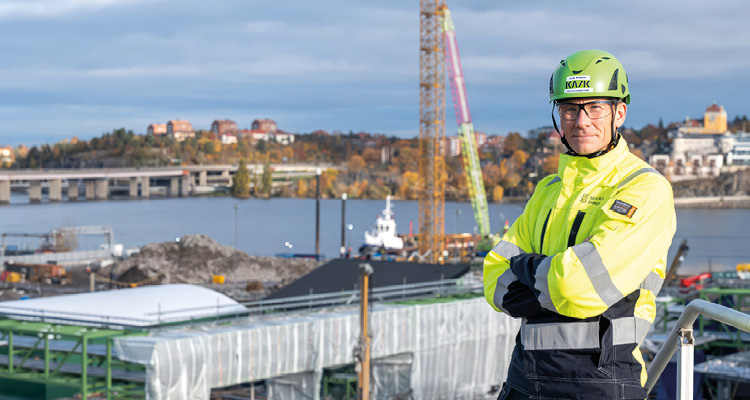
Inside Stockholm Exergi’s harborfront project, aiming to remove more CO2 than the city’s entire road network

Typically, only one in 200 ‘mega-projects’ – projects with a capital cost above €1 billion – is delivered on time, on budget, and to the highest quality. For Stockholm Exergi, this is the exact goal it’s striving to reach with Bioenergy with Carbon Capture and Storage (BECCS) Stockholm – a €1.2 billion facility being built on the city’s harborfront, against a company turnover of just €800 million. According to Egil Nybakk, the company’s BECCS Director, it’s one of the most closely watched projects in European climate policy. “We’re only 0.5 percent into that club,” he begins, regarding the mega-project failure rate. “We’re absolutely determined to deliver on this.”
Established in 1853, Stockholm Exergi’s core business has always been district heating and electricity, drawing on waste incineration and residuals from forestry and the paper industry to supply around 80 percent of Stockholm’s district heating market. As forestry and paper waste would otherwise rot and release carbon back into the atmosphere, the company’s existing plant is already carbon neutral and, today, it operates five power plants in Stockholm.
Beyond carbon capture
Stockholm Exergi’s new facility – dubbed the ‘Energy Harbor’ – will capture CO2 directly from the plant’s flue gas, ship it to Norway in partnership with Northern Lights, and inject it 2.6 kilometers beneath the seabed for permanent storage. “Conventional carbon capture simply prevents emissions that would otherwise enter the atmosphere,” explains Egil. “Useful, but not transformative. Bioenergy with carbon capture and storage goes further; because the biomass fuel is already carbon neutral, capturing and storing its emissions produces a net negative result. Research shows that BECCS – negative emissions or carbon removal – is needed to help stop global warming.”
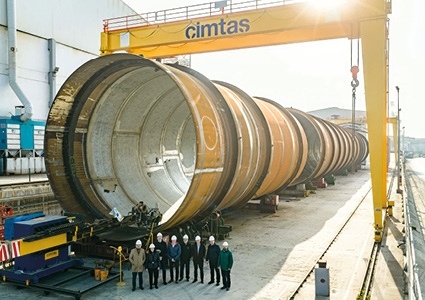
Once operational, the energy harbor is expected to capture 800,000 tons of biogenic CO2 every year. “This equates to more than the fossil emissions from all road traffic in Stockholm, and is comparable to the entire aviation sector in Sweden,” Egil points out. “It will be, as far as we are aware, the largest facility of its kind in the world.” The physical scale matches the ambition: a building 500 meters from the existing power plant, with a footprint of 50 by 160 meters and standing 22 meters high, fed by components shipped in from across Europe, Asia, and South America. Next year’s installation campaign will use the largest onshore crane in the world.
The project’s significance extends far beyond Stockholm. European climate strategy has been waiting to see whether BECCS can be scaled up at all, and this is the first attempt to prove it can. “If we’re successful, I’m confident we’ll help create a new industry. If we fail, appetite for the next project will likely be much lower. We’ve seen this happen before in Sweden with a battery factory, when a huge bet was placed on a single project which failed. The company went bankrupt, and no one wants to invest in a new battery factory here now. We lost that opportunity and critics are watching our project expecting the same outcome – therefore, this project matters enormously to European climate and net-zero strategy,” reveals Egil.
Collaboration is key
16 months into execution, with piling and foundation work now handed over to construction partner SAIPEM ahead of a major September milestone, Egil is candid about what he believes separates projects that survive from those that don’t: how contractors and vendors are treated. “We are not working with our contractors and vendors in a transactional way,” he continues. “We are working with them as partners. Everybody involved shares the same end goal of reaching operation on cost, quality, and without accidents, while everyone stands to benefit once that happens. It’s incredibly important and that’s why I spend so much time traveling to meet the companies delivering the project directly.”
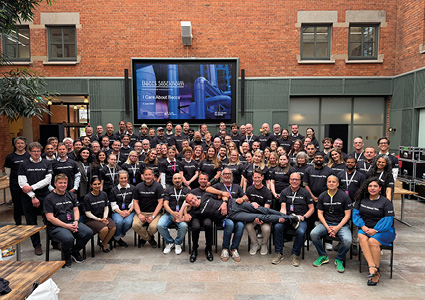
With workforce numbers on the harborside site set to rise from a few hundred to around 1000 people, Egil emphasizes safety is paramount. “It’s extremely important to us that, throughout this project, nobody gets hurt – physically or mentally. We spend a great deal of time making sure this is a genuinely safe place to work, where people feel safe and feel empowered to raise their hand and stop work if something is deemed dangerous. That’s a major focus for us right now – making sure we deliver this project successfully which means on time, on cost, and to quality, but most crucially with everybody remaining safe in the process.
“We want Stockholm Exergi to be the world leader – not just in BECCS, but in CCS more broadly,” adds Egil. “We believe this is a new path that will change the way the company operates. Both our board and our CEO believe climate will play a vital role in how we do business going forward.” Mechanical completion is targeted for the first half of 2028, with commissioning to follow and full operation expected by the end of that year. Stockholm Exergi’s ambitions don’t stop there – Egil says the company intends to use the capability it will have built to mature further projects once BECCS Stockholm is up and running.
“While the rest of the industry seems to be watching and waiting, we have taken a big leap,” he concludes. Whether that leap pays off will shape not just Stockholm Exergi’s future, but the credibility of carbon removal as a serious climate strategy across Europe.