How Marin Sanitary Service turns waste into highly valuable resources
With a history stretching back 75 years, Marin Sanitary Service has been at the cutting edge of recycling and food waste solutions while also pushing towards a zero-waste world at the same time. Joe Garbarino, Co-Founder of the company, was a pioneer in many respects. Beginning his business hauling burlap sacks full of waste on his back across the steep hills of San Francisco, he could see the recycling potential that waste offered from the start.
“He was a maverick,” Justin Wilcock, COO, explains. “He implemented the first county-wide curb side recycling program, which heavily influenced national policy, and operated the first indoor sorting and recovery facility for construction debris. These innovations established us as leaders in recycling and resource recovery across the country and the world.”
Today, Marin Sanitary Service provides residential and commercial waste collection, recycling, and composting via four key divisions: Marin Sanitary Service, which is the collection arm of the company, the Marin Recycling Center, which sorts and bales recyclables, the Marin Resource Recovery Center, which processes non-hazardous construction and demolition debris materials, and a Household Hazardous Waste Facility which accepts oil, paint, batteries, and other hazardous wastes, including e-waste materials.
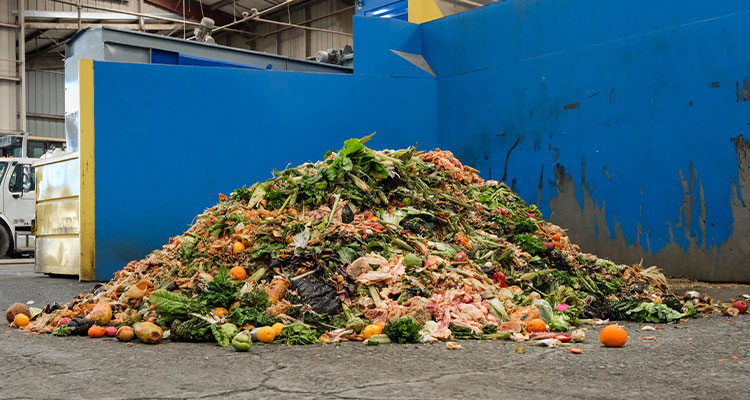
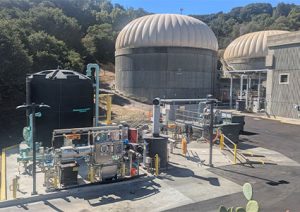
“We have been introducing innovation in food waste collection for over ten years, but it was only in 2022 when California legislated for food waste collection,” continues Justin. “Our commercial food waste program, which we call Food 2 Energy, is far ahead of the curve, repeating our history of being ahead of legislation and state policy.” This program captures food waste from restaurants, grocery stores, and other businesses, and converts it to methane through anaerobic digestion, which helps power the nearby Central Marin Sanitation Agency (CMSA) sewage treatment plant. “Conveniently this is less than a mile away from our facility,” Justin continues. “The food waste is used in the digestion processing of biosolids to create energy. The addition of the food waste has meant that the efficiency of the microbes has greatly increased, leading to the site becoming energy-positive; it now produces more energy than it uses.”
This collaboration was made possible, in part, thanks to the company’s dedication to building positive relationships with the broader community. This includes an education program, which sees school children welcomed to Marin Sanitary Service’s recycling facility to learn more about the benefits of recycling.
“Our regional presence really facilitated the partnership with the Central Marin Sanitation Agency to convert food waste,” Justin agrees. “Initially, we had been permitted to install a digester on our site. We realized during that process that it made more sense to partner with the water treatment facility as they were already increasing their ability to process biosolids. Starting the process on our site would have required significant capital expenditure and ongoing maintenance costs to the same footprint of rate payers. This arrangement is a much more cost-effective and efficient solution. The plant’s location means we can deliver three loads of organic material a day. With the modifications that have been implemented, this process has become a relatively straightforward logistics operation.
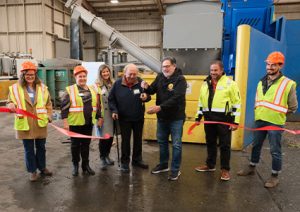
“This partnership has been doing so well that we have expanded the program to incorporate a new machine that is able to separate packaging from food waste – material that previously would have been destined for landfill. This represents a significant increase in reusable resources. In the two years the program has been running, we have been able to take in more material and provide the treatment facility with enough resources to go from having to buy energy from the grid to being able to sell some energy back to the grid.”
Educating community
Beyond operational innovation, Marin Sanitary Service recognizes that true leadership requires changing mindsets about waste. Its outreach and education programs have also been instrumental in introducing change. Its community-focused approach is supported by a dedicated team: “We have a team of five individuals who are working with businesses, regional groups, and organizations. We see ourselves as their partner. We help implement recycling programs but also place a significant emphasis on the importance of reducing waste, recycling, and reuse. It’s vital to transition toward a ‘resource recovery’ message because these materials have value and the potential to provide further uses.”
As technology develops, significant improvements in efficiency and the quality of the resources that can be recovered are emerging. Justin highlights some of the latest advancements that Marin Sanitary uses in waste sorting: “For example, we have recently implemented an optical sorter that separates different materials. Because we have such a sophisticated process, our bales are incredibly clean, and free from contamination. This in turn means they sell for a premium off-setting the rate payer contribution to our processing costs. We’re also adding a second optical sorting machine which will help to capture even more Polyethylene Terephthalate (PET) and High-Density Polyethylene (HDPE) plastic containers.”
Justin then takes a moment to reflect on the company’s goals moving forward: “It has been a difficult year for the company as we mourn the loss of Joe Garbarino. Looking forward, I see opportunities for growth and the ability to continue Joe’s legacy, leading the industry. Led by Joe’s daughter Patty Garbarino and cousin, Dave Garbarino, we will continue to invest in new and emerging technologies (such as AI sorting tools and hydrogen vehicles) to bolster our capabilities and environmental impact, and we will look forward to continuing to expand our reach by acquiring more contracts in our region.”