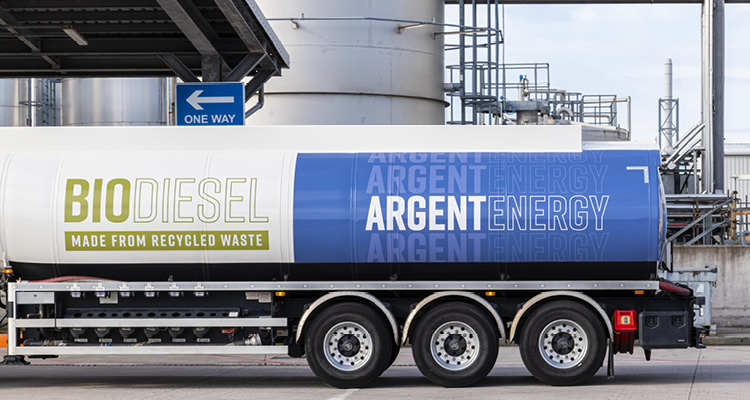
How Argent Energy Group turns waste fats into new-generation biodiesel that drastically cuts greenhouse gas emissions

With a vision to help decarbonize transport worldwide, Argent Energy Group (Argent) is a European producer of second-generation biodiesel with an annual production of around 200,000 metric tons. From its plants in Cheshire and Amsterdam, the company exclusively uses waste materials to create its biodiesel while continuously searching for new waste to be turned into higher value products. Louise Calviou, Chief Executive Officer, sheds more light on Argent’s mission and objectives.
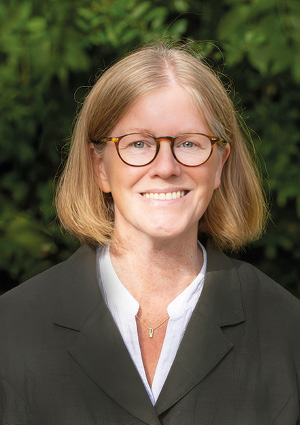
“Argent first began producing biodiesel over 20 years ago at our plant in Scotland, which was originally designed as a demonstration facility for Europe to show that we could use and convert waste fats that could not be used for food, feed or other chemical application. At our core, we make second-generation biodiesel from certified end-of-life waste. This means we will not use anything that could serve an alternative purpose; it has to be a real waste product. We take the most degraded fats that are truly difficult to treat, the dirtiest feedstocks, and through extensive pre-treatment and state-of-the-art processing technology, we turn them into a clean, high-quality biodiesel product. When you compare it against a fossil fuel, this product delivers around a 90 percent greenhouse gas benefit. Our main business is producing biodiesel through our production plants in the UK and the Netherlands, and we also have a high blends business through which we sell directly to bus and HGV operators. While we started at around 50,000 tons of biodiesel, today we are at approximately 200,000 tons, making us one of the leading producers of waste-based biodiesel. We are owned by John Swire & Sons, a large multinational with strong sustainability ambitions, which makes us a natural fit within their portfolio as we help them achieve those goals,” she begins.
Meeting increased demand
Argent’s mission is to reduce the world’s carbon footprint. Supporting this mission is its Dieselite product range, which has already made a significant difference within the transport sector. Although petrol at fuel stations contains bioethanol and retail diesel typically includes up to the standard B7 blend, a maximum of seven percent biodiesel, transport sectors like HGVs and buses remain among the hardest to decarbonize via electrification alone. Dieselite addresses that gap directly by offering blends of between ten and 30 percent biodiesel, which is significantly higher than the fuel available from filling stations and allows operators to make a meaningful reduction in their greenhouse gas profile with minimal operational changes. Some of Argent’s customers run entire bus fleets on its Dieselite high blends. Moreover, the company varies the blend percentage seasonally to maximize greenhouse gas savings. In summer, customers can benefit from a higher biodiesel blend, while in winter, Argent optimizes the blend percentage for seasonal conditions. Over 9000 vehicles across the UK are currently running on Dieselite, demonstrating that the approach works at real scale with no issues.
This year marks the tenth anniversary of Argent’s standalone site at Stanlow, a milestone the team has celebrated with great pride. “Earlier this month we had a celebration lunch on site with cake and balloons, and some of our colleagues who were there from day one were sharing stories and pictures from their first day,” Louise recounts. “Stanlow was the first biodiesel plant of its kind, featuring a bespoke system for handling and pre-treating waste feedstocks. The process begins in what we call the fog pit, which is fat, oil and grease that then passes through various cleaning stages before it can enter the main biodiesel plant. Always looking for ways to improve and maximize, we started at around 75,000 tons and have since grown that by 50 percent through investment in additional pre-treatment technologies and the main plant itself. We have also installed a wastewater treatment plant, which has improved our environmental footprint further.”
That tenth anniversary also serves as a springboard for the next phase of growth, most notably the major expansion underway at Argent’s Amsterdam site, which the team are particularly excited about. “Our production facility in Amsterdam is similar in size to Stanlow, with an output of 100,000 tons a year. To complement it, we have invested over £100 million in a brand-new plant there, which will basically triple our current capacity in the city and make the business twice as large,” Louise elaborates. “The expansion is designed to meet the growing demand for biofuels across Europe. The UK could also have been a destination for this investment. However, decisions such as the cancellation of this year’s planned consultation on increasing RTFO targets have undermined confidence in the long-term policy support needed to drive investment in renewable fuel technologies and future industry growth. We chose Amsterdam for its exceptional infrastructure and location, given that our site sits right in the port, with strong road, rail, and marine connections, and because the Netherlands is strongly supportive of decarbonization and the circular economy.”
Extending reach
Alongside that infrastructure investment, Argent has been extending its reach into the marine sector, a market it views as increasingly central to the future of the business given the challenges associated with electrification and the increasing demand for biofuels. The company has already completed a series of groundbreaking biofuel trials that demonstrate ships can run effectively on its biodiesel blends and Bio Fuel Oil with almost no change to the ships. Part of these trials included working with Swire Shipping who ran three ships on B24 and B30 blends very successfully. Additionally, the company has been conducting trials in the inland marine sector, from the port of Amsterdam, where there are many chemical barges that move the product up and down the Rhine from the Netherlands to Germany.
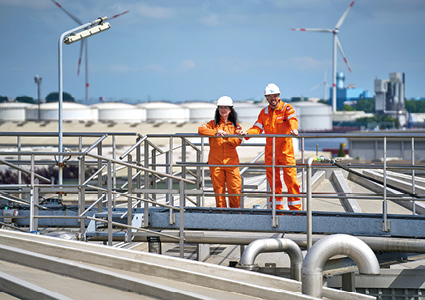
“The purpose of these trials is to show consistently that we can reliably use biodiesel in the marine sector too, and there will be more evidence of that over time,” Louise continues. “We believe it is possible to run vessels on up to 100 percent biodiesel, which would make a significant difference to the sector’s emissions profile. The Netherlands has its own decarbonization targets and we are hoping that the International Maritime Organization will reach some sort of agreement globally to find compromises that everyone can sign up to. In addition, we have a whole portfolio of what we call our Argent SeaFuels that can be used in that sector, which includes 100 percent blends of FAME and Bio Fuel Oil. We are also looking at developing bespoke products that suit each marine customer’s needs. There is a lot of anxiety in the marine industry about whether decarbonization requires buying entirely new ships with different technologies, and the answer is no. You can take an existing ship, put a biofuel in it, run it successfully and achieve meaningful decarbonization right now. It is a practical solution that is already here,” she clarifies.
Delivering on that ambition across multiple sites and sectors requires a strong and cohesive team of experts, and culture is something Argent invests in with a lot of care. Above all, safety is central to the company’s culture. “Our ambition is that everyone goes home safely every day,” Louise emphasizes. “As we do not want anybody to be harmed, we build safety into all of the decisions we make; it is by far our top priority. This is achieved through management walkarounds, safety training covering everything from the basics like slips, trips and falls, through to more complex site-specific risks, and by actively encouraging employees to call out unsafe behavior. We want every employee to feel empowered to stop what they are doing if they think it is unsafe without fear of a negative reaction. Additionally, we monitor input factors rather than purely output metrics, tracking the number of preventative safety conversations alongside incidents.”
Empowering people
An equally important aspect of the company’s workplace culture is its ongoing commitment to collaboration and continuous improvement. In line with that dedication, Argent runs several training programs, including one called 21st Century Leadership. This specific program has brought together people from different functions and levels of the organization and between them, they have come up with strong practical improvement projects that have delivered impressive results. “I think this program shows that innovation does not come from any one group. People have good ideas everywhere, and when they work collaboratively, they come up with much better ideas and feel a real sense of ownership over the outcomes, because they can see what contribution they are making. Overall, we try to create a culture where everyone feels empowered to contribute, because that is how we unlock tangible improvement. We firmly believe that simply because something was being done a certain way before does not make it the best approach. Our market and our customers are changing constantly, and we have to make sure we are always thinking about new ways of doing things and looking out for the next opportunity,” she continues.
Continuous improvement is not only applicable to the company’s culture and processes, but also to its commitment to sustainability across its own operations as well as its products. Sustainability guides every interaction and decision at Argent. The team is constantly looking for ways to reduce energy consumption, carbon emissions and water usage across the business, with wastewater treatment investment already in place to minimize environmental impact. At the same time, Argent is consistently looking out for alternative fuels and working on its energy efficiency. “Just because we make a green product does not mean we rest on our laurels. Making our business as sustainable as possible is not separate from our commercial ambition, because if we can reduce our own energy usage in the process, the saving we can offer customers becomes even greater. All we want is to be able to offer the most sustainable product we possibly can,” Louise concludes.
Since its inception, Argent has been successfully turning unwanted waste into one of the most compelling decarbonization solutions available right now. With marine trials proving the technology works at sea and 9000 Heavy Duty Vehicles already running on its Dieselite, the company stands as a testament to the scalability and effectiveness of waste-based biodiesel.