How Antora Energy’s thermal batteries charge on low-cost electricity to deliver heat and power

Industry doesn’t buy technology; it buys energy – and typically these decisions center around cost, speed, and reliability. This concept guides Nehali Jain, VP of Strategy and Growth at Antora Energy (Antora), who aligns both the technical and financial divisions to drive effective decision-making.
Antora delivers affordable and reliable energy to industry, data centers, and the grid, using thermal batteries that charge with low-cost electricity, store it as heat in blocks of solid carbon, and deliver it 24/7 as heat or power. “The units are factory built and avoid two of the constraints that slow most energy projects: they don’t depend on supply-constrained critical minerals or require multi-year construction timelines,” Nehali begins.

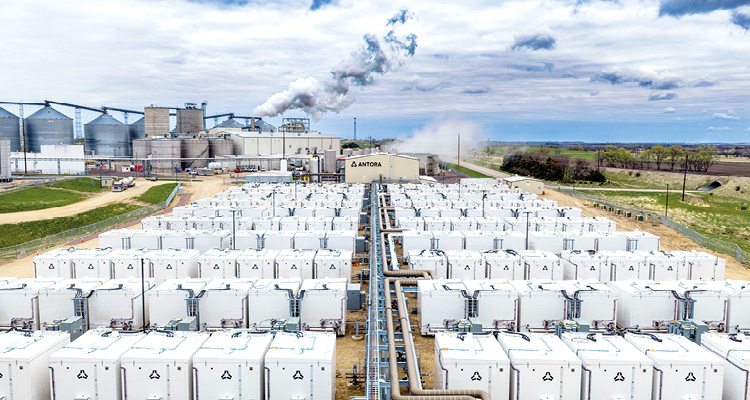
“The company started in 2018 with a deceptively simple question: how do you make cheap energy, from anywhere, available around the clock? We looked at every option for delivering firm energy, and the piece that was missing was ultra-low-cost storage. Since then, we’ve been building big and fast. We established our San Jose gigafactory in less than a year, for example, and it’s now one of the largest battery factories in the US. Earlier this year, we turned on Project Big Stone in South Dakota, which transformed from an empty lot into one of the world’s largest battery storage projects in under one year.”
As electricity demand surges around the globe, it’s no surprise that Antora is growing significantly. “The world needs a lot more energy, and it needs it quickly,” Nehali states. “One of the biggest things we need to change is how we think about energy in the first place. We tend to think of demand as static, because that’s largely been the case to date. But if industries can flexibly adjust their consumption, it opens a world of possibilities. A great deal of the energy already on the grid goes unused, because it is generated when supply exceeds demand. Our batteries charge in exactly those hours, when electricity is cheap and abundant, and then deliver constant heat or power. That gets more out of the generation and wires we have already built and lets large new loads get online fast.”
Antora has designed the mechanism to be as simple as possible. Electricity heats blocks of solid carbon inside an insulated module; the blocks hold that heat and release it around the clock, either directly as process heat or through an off-the-shelf steam turbine that generates power for a data center or the grid. The choice of carbon is where the economics turn. “Carbon is an exceptional energy storage medium,” Nehali states. “It’s cheap (about a tenth the cost of lithium-ion materials), it’s earth abundant, and it’s available everywhere. It is also energy-dense, holding roughly four times the energy of a conventional battery in the same volume, which keeps the system compact and the costs low. And it does not wear out: the blocks can be charged and discharged without limit and do not lose capacity.”
Scale and speed
Turning to Project Big Stone, Nehali explains the project set out to provide affordable, reliable energy at the scale and speed the market needs. “Project Big Stone is a five gigawatt-hour, multi-day thermal energy storage system at POET’s bioprocessing facility in Big Stone City, South Dakota. It’s delivering round-the-clock energy to POET, the world’s largest producer of biofuels, under a long-term energy offtake agreement,” she adds.
“For POET, that means lower costs and expanded energy supply at the plant, enabling it to increase production. But the significance of Big Stone goes beyond this one project: the same thermal batteries we’ve deployed there can deliver firm energy to industry and data centers across the US and around the world. Big Stone shows that it can be done – and done quickly.”
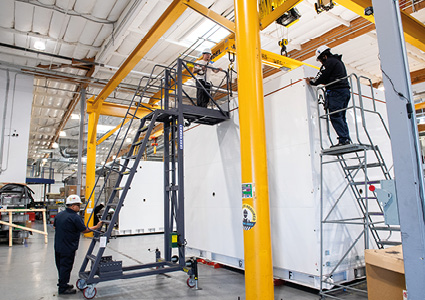
Speed is clearly a recurring theme, and Nehali traces it to modularity, as every battery is a standardized module built in the factory and shipped to site. “Once each row is in place, we can commission those batteries and start delivering energy while the rest of the system goes in behind it,” she says. “Modularity also changes what we can offer customers. We can size a project to what they need today and add modules as their load grows. A standardized, factory-built product can go almost anywhere, and it gets large new loads online on timelines that most options today simply can’t meet.”
The company is also growing in terms of manufacturing, with two new facilities added to its California campus, which has almost doubled its operational footprint. “We are also evaluating locations for a second US manufacturing hub,” Nehali reveals. “We’re thrilled to be working with leading investors like G2 Venture Partners and Eclipse, which co-led our recent $550-million investment round. With this funding, we are expanding production and accelerating the deployment of large-scale projects across the country.”
Designed for flexibility
Antora’s supply chain is a key part of that build-out. “We’ve partnered with GrafTech to develop and supply carbon-based materials for our thermal batteries at GrafTech’s St. Marys facility in Elk County, Pennsylvania,” Nehali shares. “GrafTech has nearly 140 years of experience in carbon and synthetic graphite, and St. Marys itself has a long history of carbon manufacturing that we’re proud to build on. The partnership is already creating jobs; furnaces are operational and new workers have been hired across plant operations, machining, and maintenance.”
Looking ahead, Nehali expects Big Stone to be the first of many. “Big Stone is a template that we can repeat across different sectors and geographies, with a pipeline of signed agreements with hyperscalers and industrial leaders already in hand,” she elaborates. “The same batteries can deliver firm energy to a chemicals plant, a food processing facility, a data center, or the grid.”
Nehali closes on the question she hears most often: will large new loads like Antora’s drive up energy costs for everyone else? “The answer is no,” she concludes. “Our batteries charge when electricity is abundant and the grid has power to spare, and then deliver when it’s needed most. New demand arrives without competing with consumers for power, and we make better use of infrastructure that’s already built. We design our projects with utilities rather than around them to ensure our batteries deliver affordable energy while benefiting everyone on the grid.”