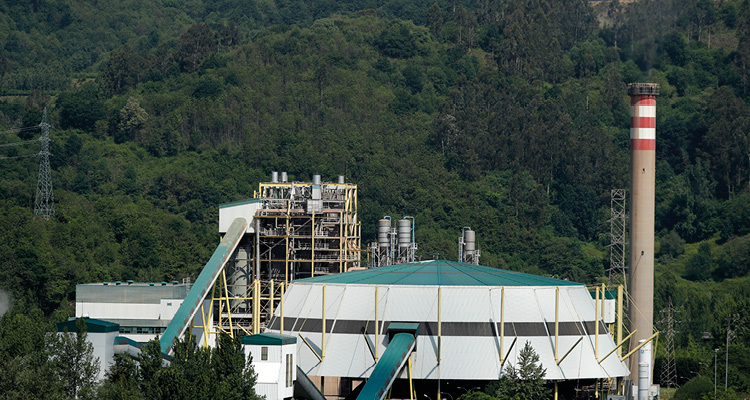
Grupo HUNOSA drives the La Pereda Project, connecting biomass, skills, infrastructure, and transition
Across Europe, coal regions face a big question: How do you move toward lower-carbon energy systems without leaving behind the industries, skills, and communities that shaped your identity? The challenge is not just about switching fuels. It is about keeping economic activity alive, opening new opportunities, and making the most of infrastructure that still matters.
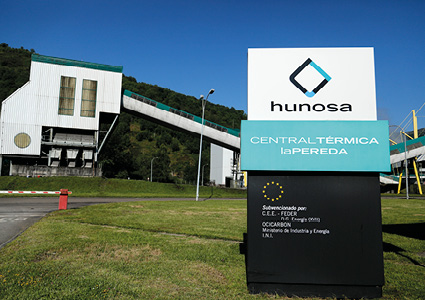
In Asturias, Spain, Grupo HUNOSA (HUNOSA) is tackling that challenge by transforming La Pereda power station from coal firing to biomass-based generation. At the heart of this effort is María Lorenzo Conto, Director of Energy and Business Development. She oversees power generation, renewable energy development, R&D, and the company’s broader transformation strategy.
The La Pereda project is more than just a fuel switch. It signals a deeper shift within HUNOSA itself. Founded in 1967 as a state-owned coal mining company, the organization spent decades at the heart of the mining valleys of northern Spain, where coal extraction defined both industry and community life. For generations, the company’s operations shaped jobs, local business, and everyday life across the region.
For María, this transition is not just a policy debate. She is helping reshape a business that has been woven into Asturias’ economy and identity for decades. “The company has always been part of the valleys’ social life because most people either worked in the mines or ran businesses connected to them.”
Transforming the region
For HUNOSA, decarbonization is not a policy box to check. It is a regional transformation happening in communities where mining has shaped the economy and culture for generations. María’s own story mirrors that change. She is an engineer who has worked in research, operations, and maintenance before stepping into her current leadership role. Those experiences now guide her decisions, connecting energy strategy to industrial growth and the region’s priorities.
HUNOSA’s journey toward renewables did not begin with biomass. Over the years, teams explored how former mining assets could support new technologies. The company launched geothermal district heating using water from old mines and looked at hydrogen opportunities tied to those resources. Still, biomass rose to the top as the option that fit the company’s broader goals. As coal generation faded, HUNOSA set out to find resources that could support both energy production and local jobs. “We had to build on what we already had, and biomass offered more than just energy. It sparks activity across the entire industrial value chain.”
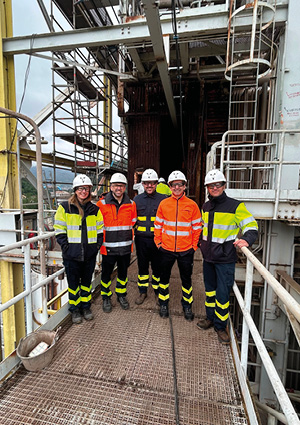
A bigger opportunity soon emerged: a renewable energy project that taps into local resources and supports businesses across the supply chain. Asturias has forestry resources, land, logistics
know-how, industrial expertise, and a workforce that understands energy infrastructure. Biomass pulls all those strengths together for a new kind of energy model.
Momentum built as European climate policy and Spain’s National Integrated Energy and Climate Plan sped up the move away from fossil fuels. HUNOSA’s next challenge: Could La Pereda run entirely on biomass and still get the most out of the existing plant? “We knew the energy landscape was changing and moving toward renewables. The first question we had to answer was whether this kind of conversion was possible.”
The answer lay in years of technical assessment. La Pereda was originally designed to accommodate limited biomass use, and previous research programs had demonstrated higher
levels of co-firing. Converting the plant to run entirely on biomass, however, presented a different challenge.
The boiler took center stage. HUNOSA and technology owner Sumitomo teamed up to see if the system could handle a full conversion. Once they proved it could work, the project moved ahead. The results made the business case clear: much of the facility could stay in use, so there was no need to rebuild from scratch. “The turbine and generator stay in place. We are not touching them.” That decision reflects a broader mindset. Instead of replacing old infrastructure, HUNOSA looks for ways to adapt industrial assets for new energy needs.
Building an ecosystem
Today, the €56+ million project is well into construction, with development underway since 2019. Teams started dismantling in 2025, and now the site is fully in build mode. “We hope to
commission the plant in summer 2027.”
While engineering is a big part of the job, María likes to talk about supply chains. She believes the project’s long-term value comes from building an ecosystem around the plant, not just treating it as a one-off. Asturias has huge biomass potential, but most of it is not tapped yet. Delivering La Pereda is more than just converting a plant. It takes a supply chain, a knowledge base, and a network of partners ready to support a new industry. To lay that groundwork, HUNOSA, through its venture capital subsidiary daughter company, HUNOSA EMPRESAS, brought together universities, research centers, landowners, logistics providers, suppliers, and engineering companies in a regional biomass cluster. “We wanted to help organize the sector around a common goal.” The objective extends beyond securing feedstock for La Pereda. The cluster’s aim is to strengthen coordination across the value chain and support new business opportunities linked to biomass production and processing.
Adding solid recovered fuel (SRF) supports the strategy. SRF makes up a small part of the mix (10 percent in terms of energy input), but it helps stabilize operations and supports circular economy goals. Economics matter just as much as engineering. By using SRF, HUNOSA brings in extra revenue that helps keep the facility viable for the long haul. “It makes the plant more economically stable.”
Innovation plays a key role in HUNOSA’s transition. Alongside the biomass conversion, La Pereda site hosts carbon capture research through the CaLby2030 project. That work builds on a
partnership with Spain’s National Institute of Carbon that started in 2009. The research used to focus on coal combustion gases, but it has evolved as the plant has changed. “Once we moved toward biomass, we could begin evaluating the CO₂ capture technology using gases from biomass combustion.”
Increased opportunities
What started as a power station conversion opened new paths for carbon capture research. Capturing carbon from biomass lets teams produce biogenic CO₂, which supports future applications like synthetic fuels made with renewable hydrogen.
Even though the technologies differ, María approaches each opportunity with the same mindset. “You have to take a hard look at the resources you already have.” She believes regions should start with their own assets, not just import solutions from elsewhere. That same thinking applies to talent as the energy transition is not just about repurposing facilities but building on the region’s experience, skills, and industrial expertise. “You cannot overlook the knowledge and experience that already exist in a region like this. They are part of what makes the transition possible.”
As construction moves forward and new energy projects take shape, HUNOSA’s priorities stretch beyond just biomass. Geothermal, hydrogen, carbon capture, and industrial growth are all part of the bigger transition plan. But one theme ties it all together. “It is not about destroying what already exists and starting over. We have people with an industrial tradition, and we have
companies in the region that can help smaller ones develop technology.”
For a company so closely tied to Asturias’ coal industry, the challenge now is to turn that legacy into a foundation for what comes next. “Projects like this create an opportunity to build what
comes next from the strengths that already exist.”