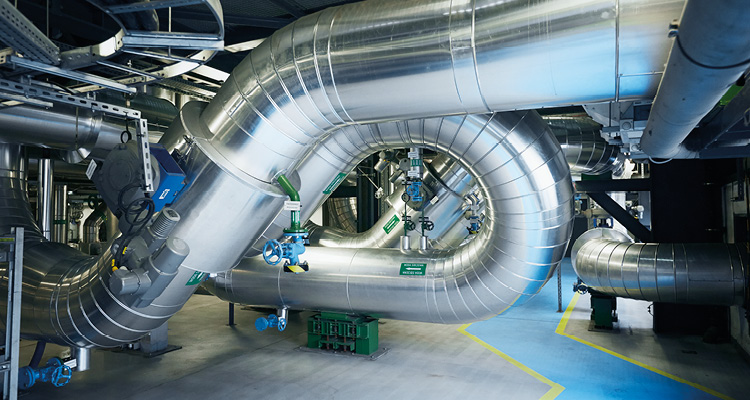
Fortum’s Częstochowa team is reshaping district heating through biomass conversion and disciplined execution

Coal still powers much of Poland’s district heating network. But pressure to cut emissions while keeping systems reliable is driving new investment decisions across the sector. Instead of scrapping assets that work, more operators want to know if they can adapt what they already have for a lower-carbon future. Fortum’s Częstochowa combined heat and power (CHP) plant is answering that question with a large-scale conversion that will let its main circulating fluidized bed (CFB) boiler run on a 100-percent biomass-based fuel mix.
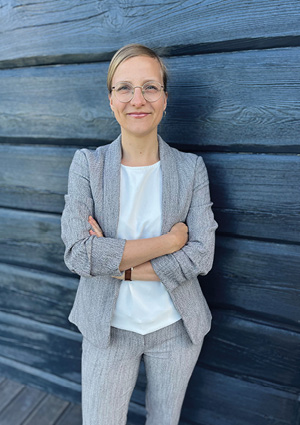
Leading the effort are Kamila Zybura-Pluta, Investment Execution Director, and Sebastian Wawrzyniak, Senior Project Manager, whose work sits at the center of Fortum’s coal phase-out strategy in Poland.
Kamila sees the project as part of a bigger change at Fortum. “Fortum is phasing out coal in its own operations, and the Częstochowa CHP retrofit is one of the projects in our coal phase-out program here in Poland. Our main goal is to get the main CFB boiler running on a 100-percent biomass-based fuel mix by the 2026/2027 heating season. We plan to finish the whole project in 2027. Other planned projects are based on district heating electrification.”
The investment does more than meet one goal. It supports Fortum’s promise to drop coal by the end of 2027 and responds to fast-changing markets and regulations. Kamila explains: “Besides helping Fortum phase out coal, one of our main aims is to cut direct CO₂ emissions by about 175,000 tons a year. The project aims to keep heat supply reliable in Częstochowa and reduces our exposure to coal prices and fossil CO₂ costs.”
Kamila oversees strategic investments in Fortum’s decarbonization program and network portfolio in Poland. She’s worked with the company since 2012, leading infrastructure and energy transition projects in Poland and Norway. The Częstochowa investment carries extra meaning for her, as it’s the city where she was born and raised.
Plant-wide evolution
The move from coal to biomass, however, takes much more than just switching fuels. The facility was originally designed for co-firing, with coal as the primary fuel. Kamila describes: “We’re retrofitting the main CFB boiler, upgrading the existing fuel handling system, building a new one, and improving key plant systems like the distributed control and main electrical systems.”
Biomass behaves very differently from coal when it enters the plant. “Before, biomass made up about 35 percent of the mix while coal was still the main fuel. Running the main boiler on 100 percent biomass means we need solutions that fit its different physical and chemical properties, as well as its unique storage, transport, handling, and combustion needs,” Kamila notes.
Delivering those changes falls to a team led by Sebastian, whose career has come full circle in Częstochowa. After 25 years in the energy sector, he now manages a project involving the same boiler island he helped install and commission earlier in his career.
What looks like a simple fuel conversion on paper is, in practice, a plant-wide engineering program. Sebastian outlines: “The retrofit covers most of the systems that feed fuel and additives into the main boiler, plus the systems that remove and recirculate the CFB boiler bed material.”
Switching the fuel mix meant rethinking the boiler’s inner workings. “Since changing the fuel also changes how we burn it, we adapted the combustion chamber grate for biomass. We also changed the height and layout of the refractory lining in the chamber’s pressure part,” Sebastian explains.
While many decarbonization programs focus on building new assets, Fortum chose a different path. The company determined that modernizing the existing facility would allow it to maintain heat production while progressing toward its emissions objectives.
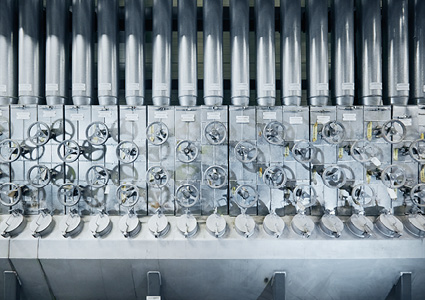
“Being able to keep producing heat during each heating season while we did the retrofit was a big advantage of this approach,” Kamila observes. The team could do that because most of the infrastructure was already in place. “The CHP plant is still relatively new. We only commissioned it in 2010, so it made sense to modernize instead of rebuilding,” Sebastian adds.
Running a project this big means carefully coordinating construction work with the plant’s seasonal needs. Heat demand doesn’t stop for upgrades, so staying on schedule is key. “Managing the schedule is critical, especially since we have to keep supplying heat to customers during the heating season,” Sebastian highlights.
Rethinking logistics
Alongside engineering and scheduling, logistics represents another significant challenge. Once the conversion is complete, biomass consumption will increase substantially compared with previous co-firing operations.
Fortum has handled biomass since the plant started, so the team knows the basics. But switching to full biomass changes everything. “The biggest challenge with large-scale biomass use is fuel logistics,” Kamila remarks.
The scale of that shift becomes clear when the team starts talking about fuel volumes. She adds: “Now our boiler consumes anywhere from 240,000 to 350,000 tons of biomass each year, depending on how we operate.” Supporting that level of demand meant a rethink of transportation and storage infrastructure. “The greatest challenge associated with the use of large quantities of biomass is its external and internal logistics, which differ significantly from coal,” Sebastian observes.
Reliability depends on more than securing biomass supply; it depends on ensuring multiple ways to move it to the plant. “Deliveries will, for the most part, be carried out by rail, and the new FHS is designed for this purpose, while the modernized fuel transport system is primarily intended for road deliveries. Still, both delivery methods can be used for both fuel handling systems,” Sebastian clarifies.
Building resilience into fuel supply meant creating backup options beyond transportation alone. Sebastian elaborates: “The CFB boiler will therefore be served by two independent systems, equipped with two silos, giving a total of four external storage silos.”
Behind the construction program sits an investment process that began years before equipment arrived on site. Fortum started evaluating pathways for its coal phase-out program in Poland in 2021 before making the investment decision for Częstochowa CHP plant bio-conversion in 2024.
Moving toward a low-carbon future
Long before contractors arrived on site, the project team was evaluating which decarbonization pathway made the most sense for the asset. “Although the execution phase of a project of this type can be completed within approximately two to two and a half years, sufficient time must be allocated to the concept and pre-engineering stages,” Kamila notes.
For Sebastian, the challenge is no longer identifying the right solution but bringing together the people needed to deliver it. “In day-to-day project management, the most important factor is the team you work with, and I emphasize the words ‘work with,’” Sebastian reflects.
“The outcome depends on the combined expertise, commitment and cooperation of all team members. In a complex brownfield project, effective coordination between operations, engineering, contractors and technology providers is as important as the technical solution itself,” Sebastian adds.
Kamila sees the project as an example of how operators can adapt existing infrastructure to meet changing energy requirements. “Coal-to-biomass conversion of existing CFB boilers is a potential decarbonization pathway that extends plant life, reduces CO₂ emissions, preserves district heating infrastructure, and typically requires lower CAPEX than building new generation assets,” Kamila comments.
Sebastian sees the same opportunity nationwide. “Poland is a country with one of the largest district heating networks, and many of its generation assets are relatively new. However, a large share of them still rely on hard coal, which creates significant potential for modernization and a gradual move away from fossil fuels,” he concludes.