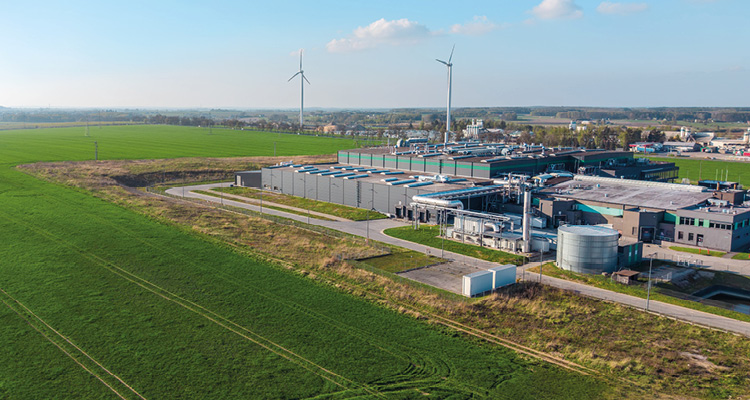
Behnam Zakeri explores how data centers can work for the grid, not against it

The most popular conversation around data centers and the electricity grid typically follows a similar pattern: the facilities are enormous and have a huge, growing demand for power, and the grid is the victim forced to keep up. However, Behnam Zakeri, Assistant Professor and Deputy Head of the Institute for Data, Energy, and Sustainability (IDEaS) at Vienna University of Economics and Business (WU), offers a more holistic – and optimistic – vision.
Behnam’s recent research, The AI-energy storage nexus: opportunities for clean energy transitions, argues that data centers are not automatically good or bad for the grid, and which one they turn out to be depends almost entirely on where they are built and the rules around them. While there are major concerns about the energy and climate footprint of AI, the paper suggests the challenge can be turned into an opportunity by pairing AI growth with the deployment of clean energy technologies, in general, and energy storage solutions particularly.

Before we get into the research itself, we’re keen to explore Behnam’s background and how it led him to this research. “I’m a mechanical engineer by training, and after a few years working on building energy services and technologies, I was drawn to the bigger picture,” Behnam opens. “I realized that technology development is crucial, but the shift to a cleaner, more sustainable energy system must happen at the system level, not only in labs. That concept pulled me toward the regulation, markets, and policy that decide whether promising technologies ever get built and later commercialized.”
Prior to joining WU, Behnam spent time at the International Institute for Applied Systems Analysis (IIASA), a global research institute where he worked alongside bodies such as the Green Climate Fund and the United Nations. “The job was to give national authorities technical support for energy planning: scenarios, pathways, and policy design looking ten or 20 years ahead,” he recalls. “It was great to see how different countries tackle energy problems, as the potential and challenges vary enormously. There is no fit-for-all solution, as something that works in one place can fail in another. It’s that creativity and problem solving that captivates me.”
In 2024, Behnam moved to WU and joined the then-new IDEaS, which focuses on where digital infrastructure meets the energy system. The institute tackles a wide variety of topics, from the fundamental question of how AI will drive up energy demand across different sectors to the physical infrastructure itself and its effect on the power system and the broader energy transition.
A different kind of demand
The grid has absorbed new demand several times before, so what’s different about the AI wave? “Scale,” Behnam states. “Through the 20th century, factories and industrial sites demanded electricity, but the grid had time to accommodate them and develop the infrastructure to meet demand. AI compute demand breaks that pattern in two ways: it is uncertain, because nobody knows how much will be needed in five or ten years, which leaves both industry and grid operators speculating; and secondly, it is urgent, as developers and hyperscalers want electricity as fast as they can get it, and the grid is expected to deliver the capacity at the same speed, which is not usually the case. The shape of the load is unfamiliar too. A large AI data center can change consumption rapidly, and the grid is gaining experience managing a load that big behaving that way.”
The instinct to treat every data center as a problem is where Behnam pushes back, although he is cautious not to overcorrect this assumption. “Data centers are not naturally positive or negative for the grid,” he says. “At one end, jurisdictions could wave the facilities through, letting them soak up spare capacity in areas already under strain. At the other end of the scale, highly constrained regions have imposed moratoria or severe restrictions on new connections outright, as the Dublin area has done.”
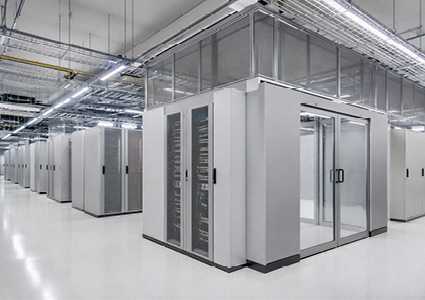
While there are some very serious concerns around pollution, water and land use, effects on local communities, and power price increases, societies are increasingly relying on data centers for data sovereignty, industrial competitiveness, and the broader benefits of AI. “That’s why we should resist a blanket rule in either direction, with governments instead focused on reforming connection policies to enable the grid to absorb the loads where it creates system value,” Behnam shares.
From his perspective, the solution is to judge each case on its merits. “The grid was built decades ago on the assumption that its full capacity wouldn’t be constantly used; instead, there is a lot of capacity, known as headroom, that sits unused,” he explains. “Using that capacity can be good for everyone, as it would spread the fixed cost of maintaining the grid among the wider community connected to it.
“However, there is a constraint. If filling that headroom means extending the life of a fossil fuel plant, we may solve the grid connection problem but not the climate problem. Some parts of the grid would be saturated while others have room to spare, often because large users have closed or moved. It’s where genuine capacity sits, on both the generation and network sides, that a data center can be a positive addition. This is increasingly becoming real policy. In June 2026, The US Federal Energy Regulatory Commission (FERC) ordered all six US regional grid operators under its jurisdiction to justify or reform their rules for connecting data centers and other large loads, explicitly combining faster time-to-power with consumer safeguards.”
The deeper change Behnam proposes is for the grid to stop treating data centers as passive loads. Rather than asking how many megawatts are being plugged in and how much planning that requires, he suggests the system should also be asking what the facility can give back on a case-by-case basis. “We know that data center operators want access to reliable power as quickly as possible,” Behnam adds. “By collaborating with them, we can make them responsible based on some measurable contributions or value they can bring to the grid, like flexibility or phased connection, in exchange for rapid access. In practice, that means instead of sizing the grid for extreme events that may or may not occur in a tiny fraction of a year, looking at how much absolute additional capacity is coming, in how many phases and what timescale, how much back-up capacity it brings, and how flexible it can be.” Ireland’s new connection policy has gone further and requires new data centers to provide onsite or nearby generation and/or storage matching their requested maximum import capacity.
What flexibility can do
Behnam’s research puts this theory to the test with numbers. The team examined the load patterns of 96 UK data centers and calculated how far each could cut its peak import capacity from the grid by adding batteries alone, with no on-site generation – and the answer is, 15 percent for the median site, with larger reductions possible. From the grid’s perspective, that’s a huge difference; a 100-megawatt data center trimming its import by 15 megawatts could be the deciding factor in a location where the network is already saturated and would otherwise need to build new capacity.
Storage and operational flexibility offer three distinct advantages. “The first is reduced import,” Behnam elaborates. “Connection capacity is expensive, and even a ten-to-15 percent cut can accelerate permitting or remove the need to build additional capacity. The second is computational flexibility. Evidence from the industry suggests AI data centers can shift their load through the day by around 25 to 30 percent, rescheduling planned compute earlier or later. The third is their interaction with the grid. Almost every data center keeps backup power, whether diesel or batteries, sitting idle in case of a problem on site. A battery charged the night before could instead feed the grid at moments of stress, on top of the other flexibility the system needs. Taken together, these turn the data center from a one-way load into something that can respond. Bilateral interaction with the grid would be a real break from traditional demand, which mostly runs in a single direction.”
Some people may question why a company under commercial pressure with little incentive to participate in typically complex electricity balancing markets would agree to these conditions. But if being flexible solves the major problem of getting connected, this could change the game. If done in a traditional way, connecting a large new load can take five-to-ten years, which is far beyond the timescale data center developers aim for. “For some data centers, it was never intended to be involved in power markets
Behnam frames flexibility as a trade that can be quantified: “Would a developer accept the grid cutting its power for ten or 20 hours a year at moments of peak stress in return for a connection two years sooner? Would it run on half the electricity it needs for another 50 hours? A developer that loses only 20 hours of power can often manage with its own storage and flexibility, or by shifting compute to another site. The point is to measure the system value a facility brings and what it wants in return, rather than take everyone through the same rigid process.” Texas is already moving in this direction. Under Senate Bill 6, ERCOT must develop a reliability service that can procure demand reductions from large loads of at least 75 megawatts, alongside new requirements for how large loads respond during system emergencies. The next step, in my view, is to define flexibility and turn it from an emergency obligation into something developers can actively trade for faster or cheaper grid access.”
With rapid access to power being a concern, big tech companies are investing in energy technologies like long-duration storage, geothermal, and nuclear. “Although not all these clean technologies solve the speed problem, energy storage plus renewables does, and the wider effect is worth encouraging,” Behnam says. “Google has backed a startup working on long-duration storage using CO2 and has also partnered on new battery technology. If these investments mature the technologies, the whole system benefits.” The key spillover is bankability and learning. Hyperscalers can sign contracts and fund demonstrations at a scale that emerging storage technologies rarely get from conventional customers. If that moves long-duration storage down the cost curve, utilities, industries and ultimately electricity consumers can benefit.
What’s next?
For someone discussing a complex problem, Behnam is strikingly optimistic about where the AI and energy landscape is heading. In the year or so since he started work on this research, he has seen the conversation evolve. “Flexibility was barely discussed when we started, but it’s now a common theme,” he reflects. “In some US states, hyperscalers are even looking at gathering flexibility from individual households in the kind of virtual power plant idea that has been talked about but never built. However, and increasingly 24/7 clean-energy matching.
“The market is moving the same way. Solar paired with batteries has become the fastest route to firm power, and – when completed -the largest solar-plus-storage facility in the US recently made a power purchase agreement to power Google data centers 24/7 in Mississippi County, Arkansas.”
Over five-to-ten years, Behnam expects data centers to keep looking for ways to prove flexibility to the grid in exchange for faster connections. Following this research, he is working on developing tools that will help identify ideal locations for new data centers. “We must remember that hyperscalers are typically some of the best-capitalized and most technologically sophisticated electricity customers in the world, and that should count for something; not as an excuse for preferential treatment, but as a reason to expect more from them in return for scarce grid capacity,” Behnam concludes. “With the right policies and reforms, the data center boom could help the wider energy transition rather than hinder it. Handled well, the thing that looks like a strain on the grid could help resolve some of the grid’s older problems.”