
At Sargent Electric Company, diversification, leadership development, and energy infrastructure demand shape today’s growth

The US power sector is changing fast. Utility-scale solar still draws strong investment but shifting incentives and market uncertainty make it tough to plan. At the same time, demand from data centers is speeding up infrastructure work, and gas-fired generation projects are returning to construction pipelines nationwide. For electrical contractors, opportunity is everywhere, but success now calls for a new playbook.
Sargent Electric Company (Sargent) has spent nearly 120 years adapting to change. Founded in Pittsburgh in 1907, the company now serves utility, industrial, commercial, telecommunications, power generation, and renewable energy markets. That wide reach matters more than ever as customers look for diverse energy solutions and infrastructure investments.
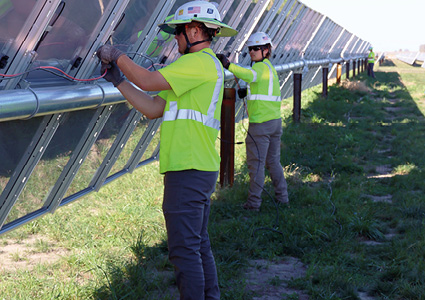
For Russ Timmers, Vice President of Sargent’s Great Lakes Region, the past year has shown just how volatile and resilient the market can be. Russ joined Sargent in 2020 to launch its Wisconsin operation and start Sargent’s solar group. He’s spent much of his career building businesses around evolving customer needs. These days, that experience is invaluable as project developers, utilities, and end users rethink where and how they invest.
“It’s been a little dicey. Many of the solar projects we targeted got delayed or canceled. That threw a wrench in our plans and made it tough to manage tools, equipment, labor, and sites,” Russ recalls. But those delays didn’t mean demand dropped. Instead, they pushed Sargent to diversify its project mix and branch into markets, attracting new investment across the power sector. “We’re seeing a significant number of gas turbine power plant projects pop up, and we’ve been invited to work on two of them. We’ve also built a strong data center group this past year and are lining up several new projects.”
Russ doesn’t chase certainty in a shifting market. Instead, he makes sure the business can win in several sectors at once. As developers balance renewable energy targets with rising electricity demand, Sargent has expanded its presence across both solar and conventional power generation.
Consistent demand
Several solar projects are moving through Sargent’s pipeline. Hart Solar in Michigan is almost done. Sunflower Sky Solar in Kansas is still under construction. Grant Solar in South Dakota should wrap up next year. Sargent also finished the Double Black Diamond Solar Project in Illinois, which now powers the grid.
Schedules might be shifting, but demand hasn’t gone away. “Even with less federal tax incentive, there’s still plenty of solar activity nationwide. We get one or two requests a week for pricing. Some projects start in six months, others in two years.” To diversify, Sargent is identifying opportunities beyond solar. “Gas turbine power plants are making a comeback across the country. We’ve already started work on one and will kick off another early next year.”
Demand keeps shifting between technologies, but it still flows to companies that can handle complex power infrastructure. Sargent is negotiating more solar projects in Nevada and West Virginia, plus a gas turbine project in Iowa. Now the challenge isn’t just finding opportunities; it’s delivering them.
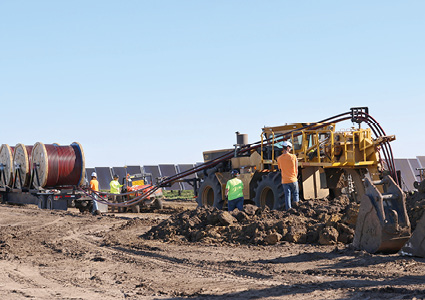
Labor availability shapes how projects are chosen and planned. In many places, contractors compete with manufacturers, infrastructure developers, and data center builders for the same workers. That means location is just as important as scope. The real constraint isn’t demand; it’s labor. “The lack of skilled labor has kept Sargent from pursuing projects in some areas,” Russ confirms.
Solar projects help because they need a broader mix of skills than many other generation projects. “Solar is a sweet spot for us. We can build these using lots of entry-level employees, which eases the strain on skilled labor,” Russ explains. “These projects are in places not affected by huge data centers or other big developments, so we’re more confident we can find the labor we need.”
Workforce issues are closely tied to another big pressure: procurement. Lead times and equipment availability are now strategic, not just administrative. That shift pushes contractors to start conversations earlier with customers and suppliers. “We’re always watching material lead times with our vendor partners and encouraging customers to order key items early, so everything stays on track,” Russ points out.
The power of partnerships
Behind the focus on lead times and schedules sits something less measurable: relationships built over years with customers, vendors, and project teams. Throughout his 47-year career in construction, design, and operations, Russ has viewed successful projects as the product of strong partnerships rather than process alone. The same philosophy influences how he approaches leadership inside the business.
Developing people is a growing focus as Sargent expands. The company has added project managers and keeps building its management team to support new work. Russ believes growth only works if people grow with it. “We pay close attention to our teams and what they need to succeed. Coaching starts with figuring out where support is needed. Then we tailor our approach, so the message lands in a way they’re open to,” he shares.
Russ sees that commitment to people in Sargent’s history, as the company nears its 120th anniversary. “We’ve always been committed to investing in our people. We offer training for leaders who want to grow, reward performance, and make sure teams have what they need to succeed. We also work hard to create a culture where people feel comfortable and valued. Too often, people dread going to work, and we don’t want that to happen here.”
Leadership development now means something new for Russ as Sargent moves into its next chapter. “I’m starting the process of stepping aside and moving to an advisory role, letting the new generation lead. This will ensure there is a transition so that everything goes smoothly for our customers and employees.”
For a company built to adapt, this transition feels more like a natural next step than a handoff. Experience, relationships, and leadership development remain just as important to Sargent’s future as the projects in its pipeline.