After a decade optimizing batteries for renewables, storage is circling back to fast-acting grid services. By Bill Mitchell

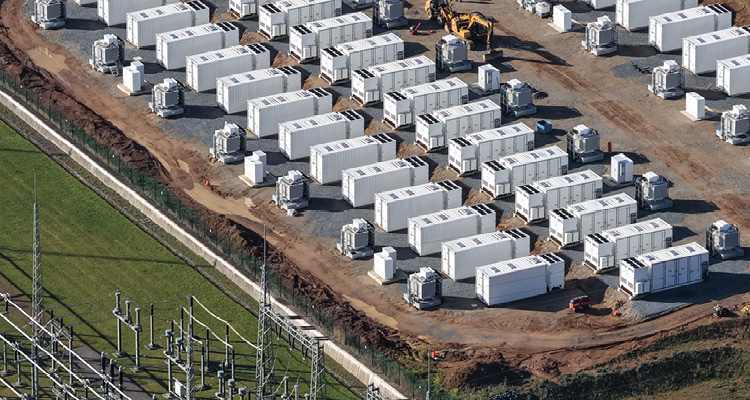
Energy storage has come full circle. After a decade spent optimizing battery energy storage systems (BESS) for renewable energy integration, the rapid expansion of AI data centers is bringing one of storage’s original applications back into focus: ancillary services, which support grid stability by balancing supply and demand.
Evolution of energy storage
When batteries were first deployed, their main purpose was providing ancillary services such as frequency regulation and spinning reserves. The energy mix was primarily coal, natural gas, and some nuclear. Storage stabilized the grid by responding quickly to changes in frequency and demand, injecting or absorbing power to maintain balance and improve resilience.

As more renewables came online, the grid needed both fast-acting ancillary services and energy shifting to integrate intermittent power. Early battery systems offered 15 minutes to two hours of power, mostly for grid services like frequency regulation.
Once solar and wind scaled, the industry shifted toward longer-duration systems that could store solar energy during the day and deliver it later in the evening. Storage progressed to two- to four-hour systems, and today, grid-scale BESS with four to six, or even eight hours of duration are turning renewables into dispatchable assets.
Now, a new set of grid challenges is reshaping storage’s role.
AI data centers draw immense amounts of concentrated power while introducing highly dynamic loads, creating instabilities and supply-demand imbalances. As a result, ancillary services critical in the early days of storage are becoming valuable again.
Batteries as active power assets
Unlike traditional renewable-storage applications that primarily shift energy, data centers need storage that responds instantly to dynamic load changes, provides power-quality benefits, and meets stringent reliability requirements.
Batteries are becoming active components of power architecture, cycling more frequently and managing large power fluctuations when computing demand changes – such as during training of large models and running inference workloads – rather than sitting idle as emergency backup. They act as shock absorbers, improving efficiency and reducing stress on both the data center infrastructure and the grid.
This shift toward more active, application-specific storage is also driving demand for a broader range of battery technologies.
A mix of technologies
The future of energy storage will likely be a mix of technologies based on the application. For data centers, there are three potential areas where energy storage systems (ESS) can be deployed.
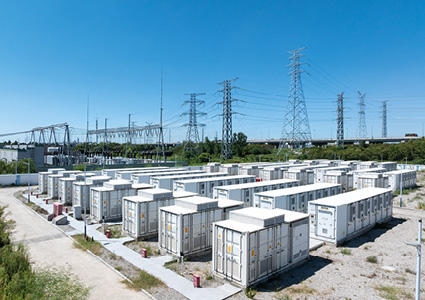
First, data halls contain a battery backup unit next to the server racks. Expected from approximately 2029 onward, massive Feynman racks could run at about one megawatt per rack, with peak power up to 1.2 MW before dropping to 300 kW within milliseconds.
Managing these aggressive power swings requires a battery chemistry capable of very high-rate charge and discharge cycles – sodium-ion, high-rate lithium iron phosphate cells, or lithium titanium oxide, potentially in conjunction with supercapacitators for high-frequency hybrid cycling.
Outside the data hall, battery backup provides short-term grid resilience or works alongside onsite generation, like gensets or turbines, to reduce grid dependence. Some jurisdictions may mandate this so the grid can prioritize residential consumption during high-demand periods, ensuring people can run air conditioners or charge EVs. Lithium-ion or sodium-ion batteries could both provide enough battery ride-through in this case.
Data centers powered by wind or solar present another opportunity for ESS. Storage can bridge the gap after sundown or firm wind generation. Either lithium-ion or a flow battery could last for eight or more hours without sunlight.
Depending on the data center’s specific requirements, all of these battery chemistries could have a play.
Grid-scale storage
Despite renewed interest in fast-acting, short-duration storage, grid-scale ESS remains the largest segment of the energy storage market, and it continues to grow.
Developers are deploying bigger batteries to shift renewable energy, manage peak demand, and support reliability. In addition to the expansion of four- to six-hour lithium-ion systems, long-duration energy storage (LDES) will become more prevalent as systems need to discharge for eight hours or more to support monthly, seasonal, or emergency needs.
Lithium-ion currently leads in stationary storage, combining manufacturing scale, extensive field experience and an established supply chain, with well-characterized performance across a range of applications. However, newer chemistries may offer advantages for fast-acting, long-duration or high-temperature use cases.
Flow batteries can support durations of six or eight-plus hours and scale economically by sizing electrolyte tanks instead of adding more cells. Sodium-ion batteries can operate in data center environments up to 45-55 degrees Celsius without active cooling, cutting BESS costs and energy use.
As ESS projects grow larger, bankability becomes key for selecting a battery technology. Most projects are still predominantly contracted to lithium sources because of project economics and the risk tolerance of insurers and financiers around less-established chemistries.
Highly accelerated life testing can demonstrate whether new technologies will perform over expected lifetimes, but nothing compares to actual performance in the field. Until competing chemistries are proven at scale, lithium-ion will likely remain the incumbent for the next decade.
A broader role
The next phase of BESS will span both ends of the spectrum. While storage isn’t moving away from renewable integration, AI data centers are expanding its role.
The future of energy storage will depend on matching each technology to the demands of the application, from millisecond response to days of energy delivery.
Bill Mitchell
www.jabil.com
Bill Mitchell is a senior business executive with a proven record of delivering leadership and strategic vision in emerging and high-technology product markets. As Senior Business Unit Director, Renewables & Energy Infrastructure, at Jabil, Bill oversees the division including the startup of an ESS manufacturing center of excellence in the US.