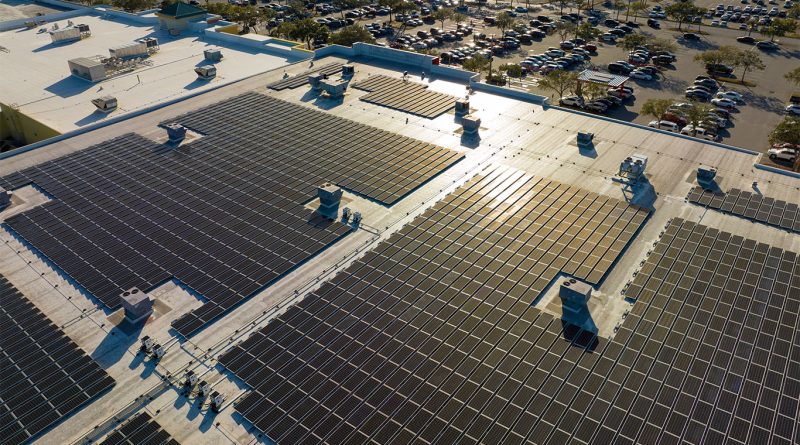
5 of the fastest-growing solar companies reshaping renewable energy
The global solar power sector has moved beyond its early growth phase and entered a period of industrial-scale expansion. Falling technology costs, corporate sustainability targets and government-backed clean energy programmes are accelerating investment into renewable energy markets across Europe, the United States and Asia.
According to the International Energy Agency, solar is now the fastest-growing source of electricity generation worldwide, with annual installations continuing to break records. As demand rises, several solar companies are separating themselves from the market through aggressive scaling, manufacturing expansion and rapid revenue growth.
Here are five companies attracting attention for their pace of growth and influence across the renewable energy sector.
1. Menlo Electric
Poland-based Menlo Electric has emerged as one of Europe’s fastest-growing renewable energy distributors. The company specialises in solar components, batteries and energy storage systems, supplying equipment across Europe, the Middle East and Africa.
Its growth trajectory has been extraordinary. The company appeared near the top of the Financial Times FT1000 ranking after recording annual growth of more than 830% between 2020 and 2023. That level of expansion reflects the wider acceleration of solar power deployment throughout Europe as businesses and households seek alternatives to volatile fossil fuel markets.
Menlo Electric’s strategy has centred on logistics efficiency and geographic diversification. Rather than focusing solely on mature Western European markets, the business expanded aggressively into emerging regions where renewable energy demand is growing rapidly but infrastructure remains underdeveloped.
Chief Executive Bartosz Majewski previously noted that the company’s mission was to simplify access to renewable energy technologies at scale. That positioning has helped Menlo become a critical intermediary between manufacturers and installers during a period of high demand and supply chain disruption.
The company also reflects a broader trend within solar companies. Distribution businesses are becoming increasingly influential as project developers seek faster procurement cycles and more reliable equipment sourcing.
Industry analysts expect distributors with strong regional networks to remain central to Europe’s renewable energy expansion over the next decade.
2. Insolation Energy (INA Solar)
India’s solar power market has become one of the world’s most competitive growth arenas, and Insolation Energy, commonly known as INA Solar, is rapidly establishing itself as a major player.
The Rajasthan-based company manufactures solar panels, photovoltaic modules and related renewable energy products. Strong domestic demand, combined with India’s push for energy independence, has created favourable conditions for local solar companies.
INA Solar recently reported an 81% increase in annual revenue, while net profit surged more than 127%. Those figures underline the speed at which India’s renewable energy market is developing.
A major driver behind the company’s expansion is the Indian government’s Production Linked Incentive scheme, designed to increase domestic manufacturing capacity and reduce reliance on imported solar equipment.
The business has also benefited from rising utility-scale solar deployment across India. Large infrastructure projects are being approved at a record pace as the country works toward ambitious clean energy targets.
Executives at INA Solar have repeatedly highlighted vertical integration as a competitive advantage. By controlling multiple parts of the manufacturing process, the company has improved operational efficiency and strengthened margins despite pricing pressure across the global solar market.
The rise of companies such as INA Solar illustrates how renewable energy growth is no longer concentrated in Western economies. Emerging markets are increasingly becoming the primary engines of global solar expansion.
3. Nextracker
California-based Nextracker has become one of the most important infrastructure providers in modern solar power development.
The company designs intelligent solar tracking systems that allow solar panels to follow the movement of the sun throughout the day. These systems can significantly increase electricity generation efficiency compared with fixed-panel installations.
Demand for tracker technology has accelerated rapidly as utility-scale renewable energy projects become larger and more sophisticated. Nextracker’s financial performance reflects that trend.
The company recently reported annual revenue approaching $3 billion, alongside a multibillion-dollar project backlog. Strong demand from North America, Latin America and Australia has positioned the business as one of the fastest-scaling technology-focused solar companies.
Nextracker’s growth has also been driven by the increasing importance of optimisation software within renewable energy systems. Its technology platform uses machine learning and weather analytics to improve panel performance and reduce operational risks during extreme weather conditions.
Industry experts believe intelligent infrastructure will become increasingly valuable as renewable energy grids become more complex. Solar power projects are no longer judged solely on panel efficiency. Investors now evaluate energy yield, resilience and long-term operational performance.
Nextracker has benefited from this shift by positioning itself as both a hardware and software provider within the broader clean energy ecosystem.
Its expansion also highlights the growing sophistication of the renewable energy sector, where digital technologies are becoming as important as manufacturing scale.
4. Waaree Energies
Waaree Energies has become one of the defining success stories within India’s solar manufacturing industry.
Founded in Mumbai, the company has rapidly expanded its solar module production capabilities and now exports products to multiple international markets. Waaree’s manufacturing capacity recently reached approximately 16.7 GWp, making it one of the largest solar producers in India.
The business has benefited from surging demand for domestically produced renewable energy equipment as governments seek to diversify supply chains away from China.
Waaree has invested heavily in manufacturing infrastructure, automation and research capabilities. The company is also expanding into battery storage and green hydrogen technologies, reflecting the broader convergence occurring across renewable energy markets.
Analysts say Waaree’s growth strategy mirrors the transformation taking place throughout the global solar power industry. Manufacturers are increasingly attempting to become integrated clean energy businesses rather than pure panel suppliers.
Financial markets have responded positively to that strategy. Investor appetite for renewable energy manufacturing assets has increased substantially as countries prioritise energy security alongside decarbonisation.
Waaree executives have argued that India could become one of the world’s most important clean energy manufacturing hubs during the next decade. Continued policy support and rising domestic electricity demand may help accelerate that transition.
As renewable energy investment expands globally, companies capable of scaling manufacturing efficiently are expected to remain highly competitive.
5. First Solar
First Solar occupies a unique position within the global solar power market. Unlike many competitors, the Arizona-headquartered company specialises in thin-film photovoltaic technology rather than conventional silicon-based panels.
That distinction has helped the company build a differentiated manufacturing model while benefiting from growing demand for domestically produced renewable energy infrastructure in the United States.
First Solar recently reported annual net sales exceeding $4 billion, representing significant year-on-year growth. The company has also announced major investments into additional US manufacturing facilities.
The Inflation Reduction Act has played an important role in accelerating expansion for American solar companies. Tax incentives and domestic manufacturing support measures have encouraged substantial investment across the clean energy supply chain.
First Solar’s technology has gained attention for its resilience in high-temperature environments and lower dependence on Chinese supply chains. Those factors have become increasingly important as governments seek greater energy independence and procurement stability.
Chief Executive Mark Widmar has previously described the current period as a defining moment for American renewable energy manufacturing. That sentiment reflects wider optimism across the sector.
The company’s rapid expansion also highlights a broader structural shift taking place within renewable energy markets. Policymakers are no longer focused exclusively on deployment volumes. Manufacturing sovereignty and industrial strategy are now central priorities.
As global solar demand continues rising, companies capable of combining technological differentiation with large-scale production capacity are likely to remain industry leaders.
Why these solar companies matter
The renewable energy industry is entering a new phase defined by industrial scale, technological innovation and geopolitical competition. Solar power has become central to global energy strategies, and the companies growing fastest are those capable of adapting quickly to changing market demands.
From European distributors and Indian manufacturers to advanced infrastructure specialists and US production leaders, today’s most dynamic solar companies represent a diverse and increasingly global industry.
While market volatility and policy uncertainty remain challenges, long-term growth forecasts for renewable energy continue to strengthen. For investors, policymakers and energy consumers alike, the rapid rise of these businesses offers a clear indication of where the future of power generation is heading.